As natural disasters grow more frequent and destructive, long-term recovery programs like Hud's Community Development Block Grant–Disaster Recovery (CDBG-DR) are more essential than ever.
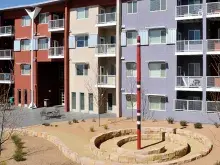
In a new issue brief, we discuss opportunities to scale affordable housing innovations designed to facilitate the development of low-density multifamily housing. Development of LDMF, sometimes known as "missing middle" housing, is a promising strategy to help cities and towns address the housing shortage across the country.
This issue brief reviews opportunities to scale affordable housing innovations, including regulatory reforms designed to facilitate the development of some forms of LDMF housing and recent lending products tailored to financing LDMF development.
The Colorado Rural Rental Housing Preservation Academy is series of trainings and conversations designed to help rural housing providers acquire and/or preserve USDA Rural Development, HUD, LIHTC, and other affordable rental housing in rural Colorado.
Cities are not homogeneous by race and ethnicity, however, with some neighborhoods still majority non-Hispanic white. Nor are changes within these neighborhoods consistent; for example, those that have experienced gentrification – or the in-migration of higher-income households into traditionally low-income communities – likely have different patterns of racial change than non-gentrified neighborhoods, given inequalities in income distributions across households by race and ethnicity.
Lessons learned from recent efforts in three Bay Area jurisdictions to distill best practices for designing and implementing local acquisition-rehab preservation programs. It includes case studies that illustrate the impacts acquisition-rehab efforts have had on communities, profiles of recent financing initiatives aimed at supporting this work, and an analysis of development costs for a sample of properties recently acquired by nonprofit stewards.
Through effective partnerships and informed decision-making processes, faith-based organizations (FBOs) who own underutilized or vacant property are able to repurpose their property to create affordable homes and public benefit. This resource assists FBOs and community stakeholders interested in advancing this strategy with understanding what it takes to successfully and effectively implement this solution and the different implementation approaches that can be pursued.
The Gentrification Comparison Tool maps neighborhoods in 93 U.S. cities over four decades by their gentrification status under three different definitions.