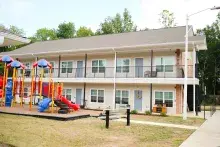
Starting in 2028, 500 USDA-financed properties with 15,000 units will reach the end of their affordability restrictions every year without proactive preservation strategies.
The Greater Baltimore Committee announced it has selected Enterprise as its advisory and implementation partner to design a private capital strategy focused on accelerating neighborhood revitalization across Baltimore.
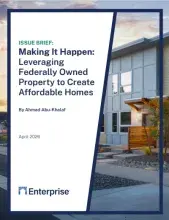
This issue brief draws on learned lessons from on-the-ground examples, discussing considerations, strategies, and attainable outcomes for repurposing underutilized federally owned property to create affordable multifamily homes.
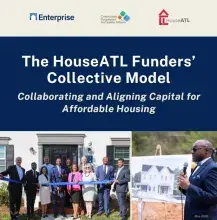
This white paper documents the HouseATL Funders' Collective and Pipeline Review Committee — a hyperlocal model for coordinating public, philanthropic, and private capital to advance affordable housing development and preservation in metro Atlanta.
Throughout the 2026 legislative session, Enterprise Southeast advocated to protect Georgia’s state low-income housing tax credit program, preserve the rights of vulnerable neighbors living in extended stay hotels, and increase state funding to prevent and end homelessness.
Preserving existing housing that is affordable to low-income households today is one of the most cost-effective ways to address California's housing crisis. A new senate bill would establish the Community Anti-Displacement and Preservation Program (CAPP), a new statewide program to acquire and preserve at-risk, currently unsubsidized affordable housing.