Navigate to Homepage

Main navigation

  • About
    • What We Do
    • Our Impact
    • Where We Work
    • Leadership
  • Impact Areas
    • Preservation & Production
    • Racial Equity
    • Resilience
    • Upward Mobility
    • Partner Sustainability & Growth
    • Resident Success
  • Capabilities
    • Products for Investors
    • Financing for Developers
    • Community Development Financial Institution (CDFI)
    • Policy
    • Advisory Services & Technical Assistance
    • Program Design & Evaluation
    • Development, Property Management & Resident Services
  • Connect
    • News and Stories
    • Events
    • Grants & RFPs
    • Funders
    • Investors
    • Advocacy
    • Learn
    • Contact Us
  • DONATE
  • LEARN
  • INVEST
  • e360 LOGIN
  • Low-Income Housing Tax Credit (2)
  • Advisory Services and Technical Assistance (1)
  • New Markets Tax Credit (1)
  • Resident Services (1)
  • Technical Assistance (1)
  • (-) Policy  (25)
  • Racial Equity (15)
  • Fair Housing (6)
  • Resilience (3)
  • Green Communities (2)
  • Climate Risk Reduction (1)
  • Equitable Path Forward (1)
  • Eviction Prevention (1)
  • Upward Mobility  (1)
  • Rural Communities (2)
  • Tribal Nations (2)
  • Gulf Coast (1)
Displaying 11 - 20 of 25
Story
Man holding up baby

Mitigating Extreme Heat Risk in Historically Redlined Areas

Last year was the hottest year on record , and 2024 has a one-in-three chance of being even hotter. As temperatures increase and climate change worsens, extreme heat events will occur with more frequency and intensity, having an outsized impact in dense, urban areas. Urban neighborhoods face increased temperatures due to building concentrations and a lack of green space, creating a phenomenon referred to as the urban heat island effect. Neighborhoods with a high number of low-income residents of color experience more intense heat island effects. This is not by chance, but is a result of deliberate, discriminatory housing policies that have impacted people of color, pushing them into vulnerable neighborhoods prone to extreme heat exacerbated by climate change.


April 29, 2024
Climate Risk Reduction
Green Communities
Policy 
Story
Aerial view of community with solar panels

Elevating Affordable Housing on the Path to Decarbonization

While the world watches and calls for swift and immediate action to address climate change, environmental justice proponents warn that not all policies are created equal, and that some may serve to exacerbate existing inequities, including by race and ethnicity. While many homeowners can invest in efficiency upgrades, electric technologies, and renewable energy generation, renters—particularly low-income and BIPOC renters—rarely have the same options. A careful approach to decarbonization must be considered to avoid exacerbating the nation’s affordable housing crisis.
November 27, 2023
Racial Equity
Resilience
Green Communities
Policy 
Story
Groundbreaking at Jackson Pearl, MS

Expanding Equity in Real Estate Development

The Low-Income Housing Tax Credit, otherwise known as the Housing Credit, is the nation’s number one tool for financing the production and preservation of affordable rental homes. So how can we expand access to this crucial tool for economically and socially disadvantaged and other historically marginalized housing providers?
February 7, 2024
Low-Income Housing Tax Credit
Policy 
Story
Cityscape_EPF tour

Eliminating Barriers to Housing through Zoning Reform

Zoning reform can make a significant difference in expanding the supply of accessible and affordable housing opportunities available for households of color and other socially and economically disadvantaged people across the country.
April 14, 2025
Racial Equity
Policy 
Story
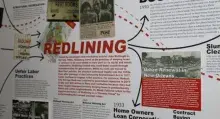
PARE Redlining

A Very Brief History of Housing Policy and Racial Discrimination

More than 300 years of exploitive and racist housing policies fostered many of the socio-economic inequities currently borne by Black, Indigenous, and other people of color (BIPOC).
December 2, 2021
Equitable Path Forward
Fair Housing
Policy 
Story
Exterior of multistory brick building with a sign reading "HOPEWORKS STATION" at the top.

Spurring Equitable Economic Growth in Communities

The NMTC is a “place-based” tax credit that drives capital to distressed and low-income Census tracts typically overlooked by traditional investment. Advocates say that making the credit a permanent part of the tax code is the most significant way to realize the full potential of the NMTC program.

September 17, 2024
Racial Equity
Upward Mobility 
New Markets Tax Credit
Policy 
Story
Barry Farm: The Asberry (Photo courtesy of Hamel Builders)

Air Quality: A Silent Stressor in Vulnerable Communities

Air pollution harms vulnerable communities most—smart housing design boosts indoor air quality, health equity, and climate resilience.
August 12, 2025
Resilience
Policy 
Story
Mother and child walking on path

Investing in Community-Led Solutions to Climate Impacts

Several stories of communities developing their own solutions to environmental and climate-related challenges are profiled in “What’s Possible: Investing NOW for Prosperous, Sustainable Neighborhoods,” a collection of essays published by Enterprise, LISC, and The Federal Reserve Bank of New York.
November 4, 2024
Policy 
Story
Woman in front of home for sale

Exploring Policy Actions to Reduce Appraisal Bias

Earlier this year, the Biden-Harris administration announced a set of actions intended to address racial bias in the home appraisal process. The announcement followed a two-year effort led by the Interagency Task Force on Property Appraisal and Valuation Equity (PAVE), an inaugural task force comprised of 13 federal agencies and offices directed to evaluate the causes, extent, and consequences of appraisal bias, as well as establish recommendations to eliminate racial and ethnic bias from the home valuation process. The task force found that the legacies of past racist housing policies, along with industry practices that reinforce negative perceptions of neighborhoods with high concentrations of Black, Indigenous, and other people of color contributed to the under-valuation of homes in majority-BIPOC neighborhoods and the loss of billions of dollars in wealth for their owners.
October 12, 2023
Racial Equity
Policy 
Story
Savannah Affordable Housing Fund

A Dedicated and Equitable Investment for Housing Opportunity

Housing trust funds — flexible, government-established sources of public funding dedicated to supporting affordable housing — offer a powerful tool with support across the political spectrum to enhance affordable housing opportunities for those most in need.
October 24, 2025
Policy 

Pagination

  • First page « First
  • Previous page ‹‹
  • Page 1
  • Current page 2
  • Page 3
  • Next page ››
  • Last page Last »

Subscribe to our newsletter

  • Image
    Logo for X, formerly Twitter
  • Contact Us
  • Careers
  • Suppliers
  • Terms Of Use & Privacy Policy
  • Legal Structure

The content on this website reflects information about Enterprise Community Partners, Inc. and its subsidiaries. Enterprise Community Partners, Inc. is a national Section 501(c)(3) charitable organization. It offers financing, asset management, and housing development through its subsidiaries described in our Terms of Use.

© Enterprise Community Partners, Inc.

  • Image
    Fast Company Most Innovative Companies 2023 logo with an illustration of a lightbulb
  • Image
    Charity Navigator Four-Star badge
  • Image
    Candid Gold Transparency 2025
  • Image
    1M homes since 1982
Back to Top