In 2006, houses of worship owned thousands of acres of land across the country yet were not seen as important players in the affordable housing ecosystem. Twenty years later, the Enterprise Faith-Based Development InitiativeSM (FBDI) has created or preserved over 2,000 affordable homes and funded $211 million in loans and equity toward faith-based development.
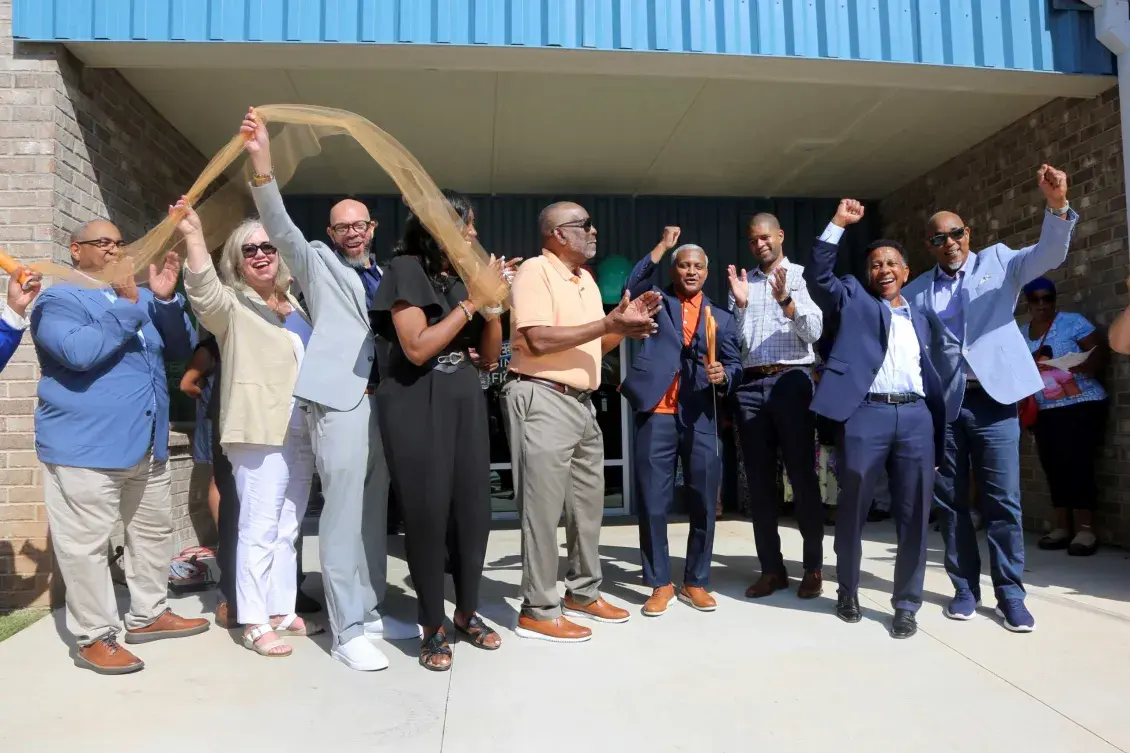
The 20th anniversary of FBDI is Enterprise's biggest year yet: One cohort member in Decatur, Georgia marked FBDI’s first ribbon cutting since we announced a national expansion with Wells Fargo in Atlanta. Three others in Baltimore, Houston, and Tacoma, Washington broke ground on new affordable homes, and the city of Columbus, Ohio and state of Virginia both passed legislation supporting faith-based development signaling the continued momentum behind this movement.
“All of these different factors converged into this awakening, what I call radical common sense, where the housing industry realized, ‘of course we should be talking to the faith community,’” said David Bowers, vice president and market leader for the Mid-Atlantic and senior advisor for FBDI at Enterprise.
Radical common sense describes Bowers’ perspective on involving houses of worship, whose mission alignment and land ownership naturally makes them “stewards of the foundational and fundamental resource for doing affordable housing.”
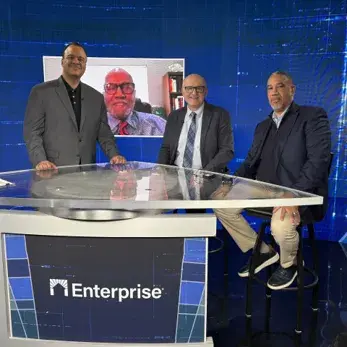
Radical Common Sense is also the name of Enterprise’s new podcast, hosted by Bowers, interviewing important players in the faith community and affordable housing ecosystem.
As Enterprise celebrates 20 years of faith in action, we spoke with Bowers about the growth of the movement, what these two decades of work mean to him, and what’s next.
How did the Faith-Based Development Initiative first get started at Enterprise?
I was hired as a leader of the Washington, D.C., market office, one of the highest-cost real estate markets in the country. One of the seeds of FBDI was that we, as an industry, typically played defense against the housing crisis. But at some point, you have to score to win. We had to not only do preservation, but we needed to put new affordable homes in the mix.
I knew that there were houses of worship interested in development, and they owned much needed land in every community — suburban, urban, rural, red state, blue state, and purple state. At the same time, many houses of worship were wrestling with their own viability and relevance as membership shrank and existing buildings deteriorated.
One of my colleagues at the time, Deborah Stevenson, had experience working with congregations that were thinking about developing affordable housing, and we connected with several key players to shape FBDI into what it is today: Rev. Donald Isaac, leader of the East of the River Clergy, Police, Community Partnership, a public safety focus group looking at engaging congregations to build housing for returning citizens; Rev. Dr. Sam Marullo, a Georgetown sociology researcher studying church and land in Washington, D.C.; and former Enterprise leaders Kirk Goodrich and Bill Frey, who were doing transactional and capacity building work with congregations in New York. From that, FBDI was born here in Washington, D.C.
How common was it for faith leaders to develop housing? How has that evolved?
Houses of worship have been doing development for a long time — that’s not new. What was novel was thinking of houses of worship intentionally as an industry player. Today, that absolutely has taken hold, and we’re continuing to build faith-based development into the code. There are more jurisdictions and states with laws supporting faith-based development, and there's real intentionality from public and private partners around supporting faith-based partners.
Is there a project or story from the last 20 years that still sticks with you?
There are so many, but one that comes to mind is Israel Baptist Church in the Eckington neighborhood of Washington, D.C. Eckington was a neighborhood experiencing intense gentrification, with many market-based pressures leading to displacement.
Here's a church that bought a little parcel of land and built affordable senior housing, which is literally right across the street from a metro. It's transit-oriented development. On its parking lot, the church built a three-level building where the first two floors have Unity Healthcare as the anchor tenant, and the top floor is an affordable banquet hall meeting space. Affordability here isn’t just about housing, but affordable access to amenities and mobility, too.
What is next for FBDI in the next 10 years?
What started in the Mid-Atlantic in 2006 has since expanded into 16 jurisdictions in nine states — thanks in large part to generous funders like the Wells Fargo Foundation and public partners interested in making faith-based development a part of their housing strategy.
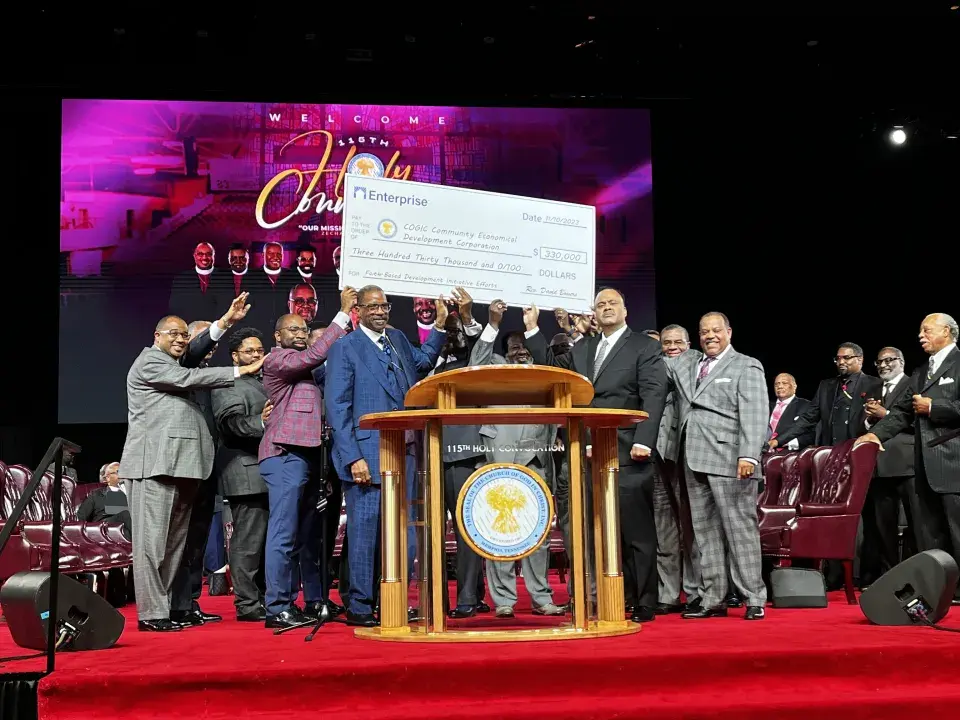
Going forward, our strategy includes going deeper and wider within those jurisdictions but also expanding into new geographies and engaging denominations at the national and regional level to scale our work for impact. We have, for example, a collaboration with the Church of God and Christ (COGIC), where we’ve trained their leaders in Enterprise’s FBDI curriculum. COGIC plans to go on to train 200 of their congregations over a decade, which has the potential to create 18,000 affordable homes and 72 community facilities.
What has the movement's growth over the last 20 years meant to you personally?
Humbled and fulfilled. There were people when we started who said, “We can’t talk about faith. We can't say faith-based.” Now we're at a point where “Yes in God's Backyard" legislation is being passed across the country.
What's really humbling is that the seeds were planted when I was 20 years old. When I was a young college seminary student, I was mentored by Rev. Dr. Joaquin Willis, the founding vice president of the Collective Banking Group of Prince George's County, a group of pastors that sought to harness the economic power of the black church. Joaquin taught me when I was a kid that true leaders don't add, they multiply. You keep working the ground, nurture the seed, pull the weeds, and you look up one day and there’s fruit. And in every fruit, there's more seed.
I see how God has been moving and orchestrating things so that my life has a meaning and a purpose. When I can do work that has that effect of making life better for people, I feel like I'm living my purpose.

The Radical Common Sense Podcast: Through in-depth conversations with clergy, policy makers, housing providers, and changemakers, Enterprise's David Bowers explores how faith communities are transforming neighborhoods, building affordable housing, and driving economic empowerment across the country. Subscribe and listen.