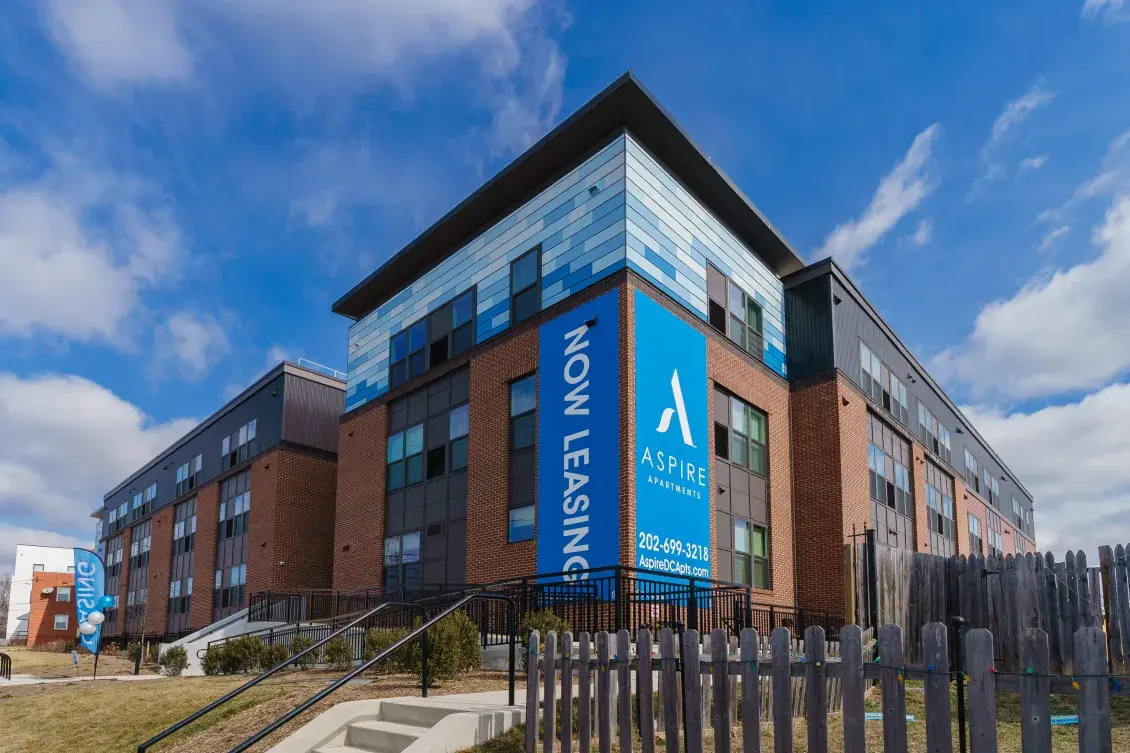
The calls started coming in toward the end of 2022 — from Bozeman, Montana; Jacksonville, Florida; even Honolulu. “People wanted to know what we were up to, how it worked, and how they could do it,” said Zachary Marks, who as chief of real estate for the Housing Opportunities Commission of Montgomery County, Maryland helped launch the Housing Production Fund, a $100 million revolving equity fund created to finance publicly owned, mixed-income and mixed-use developments.
The fund, which is expected to create 6,000 homes over 20 years, replaces private equity with public investment to build thousands of rental units, with at least 30% of them as permanently affordable. For Marks — who joined Enterprise Community Development, the largest affordable nonprofit developer in the Mid-Atlantic, as executive vice president for real estate in 2024 — the model is a means to help housing practitioners change their mindset.
For so long, many have internalized the idea that we can’t really solve this — there aren’t enough resources; the federal government changes its mind too many times; housing is too big a problem. It’s about getting to the point where people say, ‘You know what? We can do this.’
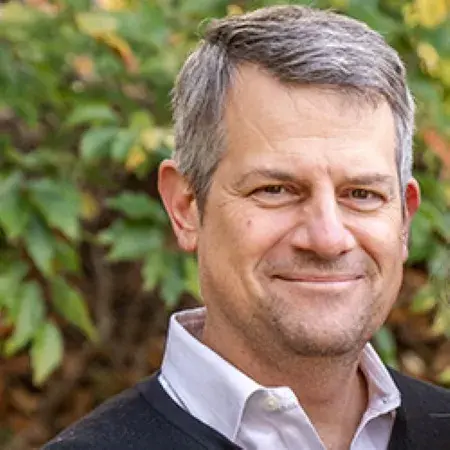
Zachary Marks
We spoke with Marks about innovative financing for affordable housing, his roots in Columbia, Maryland — the community created by Enterprise founder Jim Rouse — and his aim to help Enterprise create and preserve affordable housing at scale.
You played a leading role in creating Montgomery County's Housing Production Fund. What was the hardest part of getting local government to commit to that model, and what would you tell other jurisdictions trying to replicate it?
Within Montgomery County, the Housing Opportunities Commission had been building mixed-income housing for a long time. We started working on the Housing Production Fund because a council member asked us to do more of what we were already doing. But even in a place where everyone wanted to do it, making sure the fund could endure came down to keeping an eye on the ball.
The biggest issue was making sure the board overseeing the agency didn't get distracted, change its mind, or think it was doing something different from what it was doing.
In places where the table isn't already set the way it was in Montgomery County, the first challenge is simply the will to do it.
Are you seeing momentum building for this model in other locations?
Absolutely. A couple of years ago, a thought partner and I heard about a place considering the model, and for the first time it wasn't because one of us had talked to them. It was entirely spontaneous. Since then, by the time we get a call, it's usually because they already want to do it and need help getting started. The question has flipped from "Why would we do this?" to "Why aren't we doing this yet?"
You also collaborated with the Montgomery County Council on a $50 million nonprofit preservation fund. How do you balance the urgency of preserving existing affordable stock against the slower pace of new construction financing?
They’re complementary. Supply should be the priority, technically speaking, because it’s the biggest part of the problem right now. But what do you say to people who need housing today and would say, “Thanks for the new home in five years”? Preservation lets you respond to that more immediate need.
In Montgomery County, we bought a significant amount of existing housing and could almost immediately add true affordability and rent restrictions when a property may have been affordable but wasn’t income-restricted. Many of those properties also faced redevelopment risk, which can be just as much a displacement risk as a for-profit buyer raising rents.
The preservation fund gave us a way to protect residents in the near term. At the same time, we were creating a longer-term path for those properties to feed into the production fund, and we could finance redevelopment more reliably and control for displacement.
Was there a pivotal moment when you thought, this is going to be a revolutionary way of financing?
I have extreme imposter syndrome, so I'm constantly reevaluating whether I've achieved anything. But there were moments when it felt like something different was happening.
We weren’t trying to invent a national program — we were trying to solve a very specific problem tied to our mixed-income housing model because a council member asked us to. Then the calls started coming in from other jurisdictions. At this point, I’ve probably talked to more than 100 cities and states, often more than once.
How do you think about the tension between public ownership of affordable units and the traditional public-private LIHTC model? Are they complementary or in competition?
They are complementary, and that was intentional. We were trying to create a tool that would let Montgomery County produce more housing than it usually does every year. If we were cannibalizing LIHTC or the private market, we were making no progress. It had to be a third channel.
LIHTC was really the only affordable model left for a long time, which meant everyone expected it to do everything: be a production tool, a clean energy tool, serve people at 0% AMI. Of course, nothing can do everything. LIHTC isn't good for volume production — that's not a failing of the model, it's just not what it's set up for.
The production fund takes the pressure off LIHTC to produce at volume, and it basically generates a free 4% tax credit deal for each production fund deal — without borrowing from the resources LIHTC transactions need to close.
What brought you to Enterprise and Enterprise Community Development?
I grew up in Columbia, Maryland, and I still live there. During my childhood, I had a number of parents of friends who worked at what was then the Rouse Company, so it was a bit of a company town, and Enterprise has always been the gold standard for development, and for policy and creativity around capital.
I worked in Montgomery County for 12 years. I got to do some really cool work, but I was confined to a single county. Moving to Enterprise meant going from one county to a much larger platform, and when you work for government, you're often short on resources and colleagues — coming to a place where everyone is more talented than me and wants to help felt like a dream.
I was eager to join ECD leader Janine Lind’s team and was excited about her vision. It was, in a lot of ways, the same role I had in Montgomery County — just no longer confined to one county.
How can creative, innovative financing make the difference between a project happening and not happening?
One of the things Enterprise does well is lean on its longevity — people know it's going to be around, so long-term partnerships hold. ECD had a relationship with a nonprofit that owned some older housing stock. We were on the third or fourth phase of that redevelopment when one project lost some of its funding. One of my teammates went back to the nonprofit and reshaped how we were moving through the five-property portfolio — trading value around so that, as we completed each building, we could monetize some of that value for future phases.
That meant not treating each deal as its own isolated transaction but understanding how the whole partnership fit together. A lot of people think of innovation as finding some cool new bucket of money, but I think some of the biggest innovation right now is in forming partnerships around multi-property portfolios and thinking creatively across the whole portfolio of assets rather than assuming you can run every phase on tax credits. Sometimes the tool isn't new money at all, but a regulatory fix or a different deal structure.
I've heard a lot about ECD's work on energy efficiency and high-performing building standards. How central is energy efficiency to your underwriting today, and how do you make the economic case for it?
It's growing in importance, and honestly, even at ECD, we're still learning. We were doing housing well and doing clean energy well, but we hadn't focused enough on how those two things reinforce each other — the combination is genuinely greater than the sum of its parts.
This work matters even more in a climate where people's utility bills are climbing and often become the most acute local political issue — people get angriest at elected officials over utility bills, because it's such a basic, present need.
Some recent federal changes have affected the economics, but we remain committed, because our argument has always included an economic one, not only a mission-driven one. There's also an evolution underway in how we think about renewables: less about putting solar on individual houses, and more about building industrial-grade solar installations, improving transmission, and getting power onto the grid at scale.
Is there anything you and your team are working on right now that you're most excited about?
One of the most important things we're doing involves ECD's own portfolio. We have 118 properties, and almost all of them were originally financed — or later recapitalized — with tax credits. LIHTC typically runs on 15-year cycles, after which a property needs to be renovated and re-syndicated with new tax credits. The number of properties nationally that need re-syndication is rapidly outpacing available tax credit resources.
So, we're evaluating our own portfolio, both to demonstrate the scale of the problem and to develop non-LIHTC recapitalization strategies we can share with the industry. This isn't just an ECD issue — it's a nationwide one. There are properties with affordable-housing restrictions that will lapse, and buildings that will deteriorate if they can't get significant recapitalization, and not all of them will be served by future LIHTC re-syndication. We’re asking: what else can we do? It's not easy work, but we think what we learn will be genuinely useful to the field.