Enterprise Community Partners (Enterprise) today released a policy brief providing recommendations to policymakers at every level of government to prepare communities for an influx of migrants as climate change forces millions of Americans in disaster-prone areas to leave their homes.
In the coming years, several communities across the US are likely to find themselves on the receiving end of domestic migrations from places impacted by climate-induced disasters. In a new policy brief, Enterprise outlines how those communities can prepare.
Congressional leaders overnight released text of a $1.7 trillion spending package to keep the government funded through next September. Lawmakers failed, however, to make permanent critical disaster rebuilding aid.
The Department of Housing and Urban Development recently announced the first round of funding allocations for the department’s new Rapid Unsheltered Survivor Housing program.
What’s Possible: Investing Now for Prosperous, Sustainable Neighborhoods, essays from Enterprise, LISC, Federal Reserve Bank of New York, and other industry leaders, navigates the intertwined challenges of climate, housing, and infrastructure and advocates for a cross-sector approach to meet the climate crisis head-on.
Enterprise conducted this insurance analysis to raise awareness to the consequences of the insurance crisis on the Gulf Coast affordable housing industry and the critical need to mobilize action at the state and federal levels.
In Preparing Receiving Communities for Climate Migrations, Enterprise outlines steps policymakers at the federal, state and local level can take to help receiving communities address the impacts of climate migrations.
This report offers strategies for advocating for federal resilience policy. Each chapter includes a set of recommendations, background on the issue, explanations of the role of the Federal Government, listing of potential allies in advocating for the recommendations, and relevant examples of current or previous local, state, and federal actions.
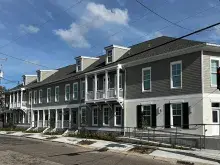
Explore the potential positive outcomes of allowing low-density multifamily (LDMF) development in areas previously reserved for single-family development, as well as prominent regulatory and financing challenges to creating LDMF housing.