President Trump has released his request for the Fiscal Year 2027 budget, signaling the administration’s priorities and providing a jumping off point for the congressional appropriations process for FY27. Similar to FY26, the president’s budget request proposes significant reductions or elimination of major housing and community development programs.
The budget request, while not legally binding, builds on the administration’s broader efforts to reduce federal spending and the federal government’s role in housing and community development programs. In FY26, Congress passed appropriations bills that rejected many of the proposals to significantly reduce or eliminate programs.
Here's an overview of the administration’s housing, homelessness, and community development proposals:
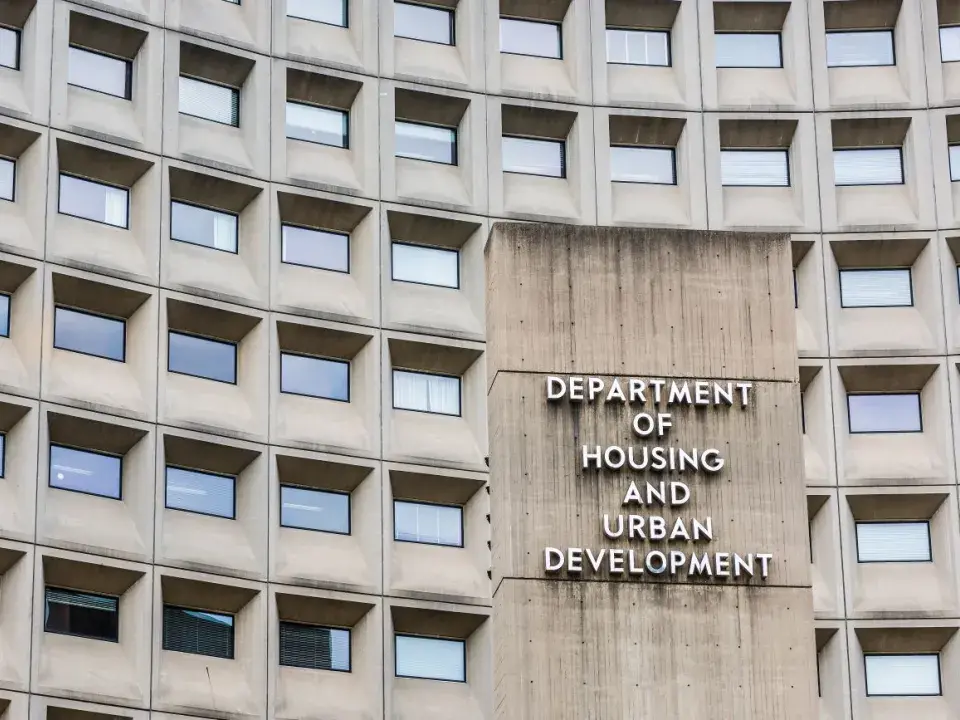
U.S. Department of Housing and Urban Development (HUD)
Overall, the request calls for HUD to be funded at $72.6 billion in new budget authority, $11.2 billion less than the agency’s funding for FY26. This includes:
Rental Assistance Programs
Notably, the FY26 budget request does not include a proposal to consolidate rental assistance programs into a state-based rental assistance program, as it did the previous year. The request proposes providing the HUD Secretary permanent authority to require public housing agencies and multifamily property owners to implement work requirements and time limits for certain assisted families. The budget also proposes removing the limit on the number of units that may convert assistance under the Rental Assistance Demonstration program. Rental assistance programs are proposed to be funded at the following levels:
- $38.4 billion for Tenant-Based Rental Assistance (Housing Choice Vouchers), a $439 million (1%) increase above FY26 enacted.
- The budget proposal includes language that would prohibit public housing agencies from issuing any new housing vouchers in 2027, including entering into new project-based voucher commitments.
- The budget further proposes a provision that would give the HUD Secretary permanent authority to require PHAs and multifamily property owners to implement work requirements and time limits for assisted families, except for families that fall into an exempted category.
- $17.6 billion for Project-Based Rental Assistance, a $494 million decrease (3%) from FY26.
- $8.6 billion for Public Housing Fund, a $302.6 million (4%) increase from FY26. This total includes $5.4 billion for the operating fund, $689.6 million (15%) above FY26. $3.2 billion is provided for the capital fund, level with FY26.
- $959 million for Section 202 Housing for the Elderly, a $21 million (7%) decrease from FY26.
- $266 million for Section 811 Housing for Persons with Disabilities, $21 million (7%) below FY26.
Homeless Assistance Grants
- $4.024 billion for Homeless Assistance Grants, $393 million (9%) below FY26 enacted. The proposal provides no new funding for the Continuum of Care program, construction of new Permanent Supportive Housing, Youth Homelessness Demonstration programs, and the National Homeless Data Analysis Project.
- The budget instead proposes to consolidate all funding under the account to an updated Emergency Solutions Grants (ESG) block grant program. This updated ESG program would allow Transitional Housing as an eligible use of funding, and update the ESG formula to include performance indicators such as reductions in unsheltered homelessness, reduced transitions to homelessness, increase in employment income, and increase in placements into unsubsidized housing.
Programs with Significant Reductions
- $16 million for the Section 4 program, a $30 million (65%) decrease from FY26.
- $26 million for the Fair Housing Activities, a $60.4 million (70%) decrease from FY26. The proposal maintains the funding for the Fair Housing Assistance Program (FHAP) but would eliminate funding for the Fair Housing Initiatives Program (FHIP) and the National Fair Housing Training Academy.
- $887 million for Native American Programs, a $467 million (34%) decrease from FY26. The proposal would eliminate the competitive portion of the Indian Housing Block Grant program, which was funded at $125 million in FY26; reduce the Indian CDBG program to $5 million, a $95 million (95%) decrease from FY26, and reduce the formula Indian Housing Block Grant program by a $239 million (22%) decrease from FY26. It would also eliminate the Native Hawaiian Housing Block Grant Program.
Elimination of Programs
The President’s Budget Request proposes to eliminate the following programs:
- Community Development Fund. $3.3 billion was provided for the Community Development Block Grant (CDBG) program in FY26. It also provides no new funding for the Pathways to Removing Obstacles (PRO) Housing grants, which received $50 million in FY26. The budget further proposes to cancel $100 million provided for PRO Housing grants in FY25.
- HOME Investment Partnership Program, which received $1.25 billion in FY26
- Choice Neighborhoods Initiative, which received $25 million in FY26
- Family Self-Sufficiency (FSS), which received $156.4 million in FY26
- Preservation and Reinvestment Initiative for Community Enhancement (PRICE) program, which did not receive new funding in FY26. The budget further proposes to cancel $10 million provided for the program in FY25.
U.S. Department of Agriculture (USDA)
The president’s FY26 budget request includes $20.7 billion in discretionary funding for USDA, a $6 billion (22%) decrease from FY26. Some highlights for Rural Housing Service programs include:
- $1.795 billion for Section 521 Rental Assistance, $80 million (5%) above FY26, and the continuation of the decoupling pilot program.
- $983 million for the Section 502 Single Family Housing Direct Loan Program, $16.8 million (2%) below FY26. The budget does not include funding for the Tribal Direct Relending Pilot, which received $5 million in FY26.
- $50 million for the Section 515 Rural Rental Housing program, level with FY26.
- $30 million for the Multi-family Housing Preservation and Revitalization Program, level with FY26.
The proposed elimination of the Section 542 Rural Development Voucher Program, funded at $42 million in FY26.
Treasury
The budget request provides $119.5 million for the Community Development Financial Institutions (CDFI) Fund. This is a $204.5 million (63%) decrease from FY26 enacted. The budget again proposes $100 million for a new Rural Financial Assistance (FA) program to support investment and spur economic development in rural communities. This new program would require 60% of CDFIs’ loans and investments to go to rural areas. The remaining $19.5 million would be to support the Rural FA program, the New Markets Tax Credit (NMTC), and the closing out of other unfunded CDFI programs.
The proposal provides no new funding for the CDFI’s Financial Assistance/Technical Assistance, Native American CDFI assistance, and Bank Enterprise Award programs.
Other Related Programs/Agencies
- Elimination of the United States Interagency Council on Homelessness (USICH), with $200,000 in funding to close out the agency
- Elimination of the Neighborhood Reinvestment Corporation (NeighborWorks America), with $15 million in funding to close out the agency
- Elimination of Health and Human Services’ Low-Income Home Energy Assistance Program (LIHEAP), funded at $4.045 billion in FY26
A breakdown of the affordable housing and community development spending levels can be found in our Housing and Community Development Appropriations Budget Chart. Enterprise will continue our work in the 119th Congress, engaging with lawmakers, the Administration, and our partners to advocate for robust funding for housing, community development, homelessness, and resiliency programs.
To stay up to date with critical housing policy news, subscribe to our bi-monthly Capitol Express newsletter.