For years, residents of Yakima, Washington, drove by a former Marine Corps armory and understood its history from the two tanks parked in front. Lowel Krueger had an idea for the building’s new mission.
“I thought, why wouldn’t we try to take something like that and turn it into housing for veterans who had been experiencing homelessness?” said Krueger, executive director of the Yakima Housing Authority.
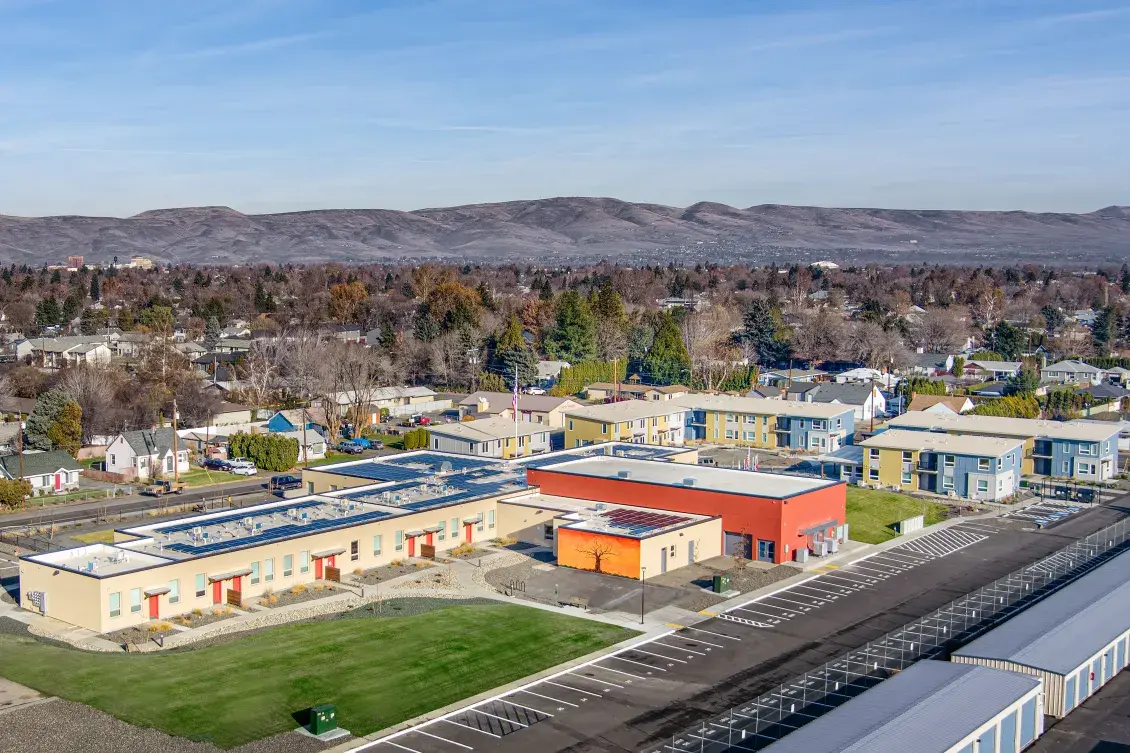
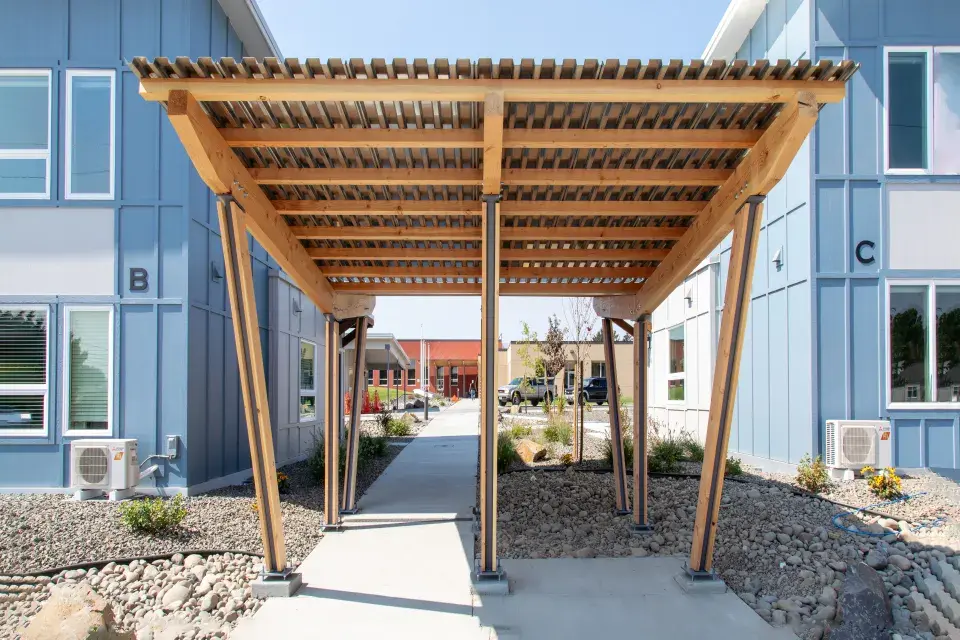
Fast forward to today, and that former military facility — declared surplus in 2014 — is now Chuck Austin Place: 41 affordable homes serving veterans who have experienced homelessness along with on-site health clinics and behavioral health services.
As the country faces a relentless shortage of affordable rental homes, developers, policymakers, and advocates continue to explore innovative strategies to expand the supply of affordable homes. One promising approach: leveraging underutilized publicly owned properties, including federal property, for affordable housing development.
In a new issue brief, Enterprise Senior Director for Policy Research Ahmad Abu-Khalaf examines the promise and challenges of this innovative approach.
We spoke with Krueger about Chuck Austin Place’s origins and how the project was able to overcome hurdles, garner political backing, and move forward with a first-of-its-kind approach that he says can be replicated nationwide.
How would you describe the housing situation in Yakima, Washington?
Yakima is an agricultural town that has rural and urban features, somewhat like the Central Valley of California. But what folks tend not to understand is that homelessness and housing issues are universal.
It doesn’t really matter whether you’re talking about rural areas or downtown San Francisco or Seattle or L.A. We’re all struggling with homelessness in some way and the general cost of housing.
How did Chuck Austin Place come to be?
The Yakima Housing Authority has played a prominent role in our homeless network for Yakima County. During one of those meetings, City of Yakima staff brought up that the old Marine Armory training facility was going to be available to be transferred from the federal government.
This facility originally was a training site for our military. Most folks knew where it was—in fact, there were two tanks parked out front. We thought: why wouldn’t we try to take something like that and turn it into housing for veterans who had been experiencing homelessness?
We had also run into a scenario where veterans looking for services had to run all over town —to the VA in one place, the Vet Center in another, then the housing authority. Could we not have one place with medical services and office space for the VA and veteran-specific organizations?
As we talked about it, we decided to propose this as a concept to our city council. They were supportive, which gave us the footing to pursue political buy-in at the state and federal levels. Once we had that, it made it much more viable to go through the transfer process and build out the property.
What was that timeframe? How long did it take to get all that buy-in?
From the initial time we talked about doing it until we finished construction was over five years. It’s never a very quick process, and we also ran into delays. Even when we got the political buy-in and the Low-Income Housing Tax Credit award and had our funding stack pretty well set for the property, we still ran into a scenario where the transfer of the property remained a new concept for the U.S. Department of Health and Human Services (HHS).
Ours was the first in the country to go through the disposition process under the McKinney -Vento Act, with homeless assistance as a primary purpose of the property disposal. HHS asked us to do periodic reporting to ensure that we will continue using the property for the same intended purpose, with a mechanism that requires us to pay back the appraised value if any changes in use occur. At first, HHS said we can’t use federal Housing Credits as a foundation for the funding, since the property use may change after the affordability term expires. I said there’s just no realistic way for me to do this without them.
It wasn’t until there was a second development in San Francisco, in Representative Nancy Pelosi’s district, where the city of San Francisco backed the deal and said they would provide a guarantee to pay back the appraised value if any changes in use were made. That was an example for us. HHS then came back to us and said they thought they had found a workaround — if we agreed to the same thing, we could move forward using the housing tax credits.
What were you most surprised by?
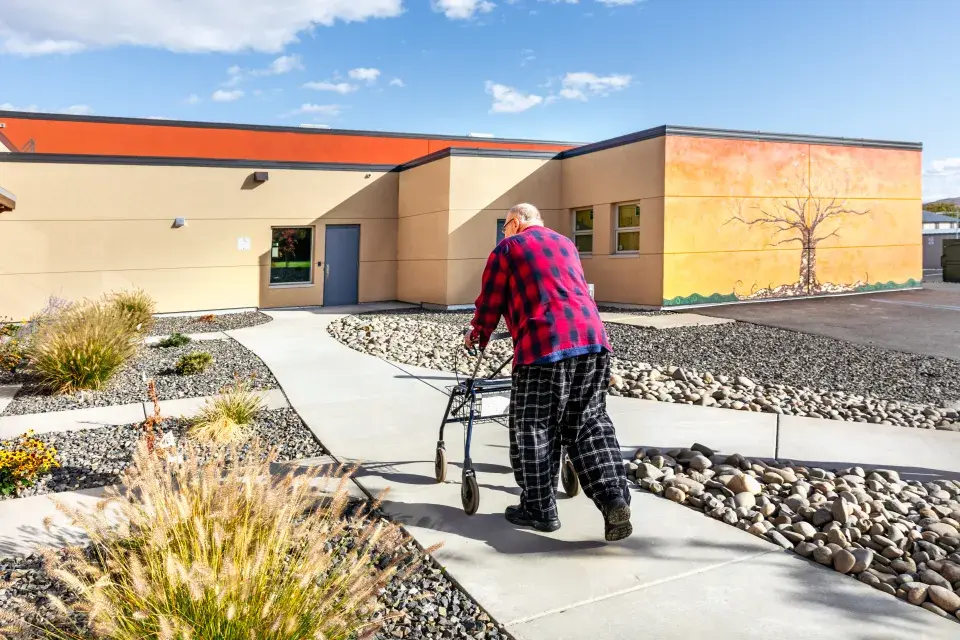
What I found fascinating was that the public was very supportive. We didn’t run into anybody who said this was a bad idea. Even the Yakima City Chamber of Commerce, which had its own issues with businesses dealing with individuals experiencing unsheltered homelessness and sleeping in doorways, was supportive.
I think part of [the support] was that we were hyper-focused on addressing veterans’ needs. Today, services are open to any veteran, and any veteran I talk to in the community knows where Chuck Austin Place is and has likely been there for some need of their own.
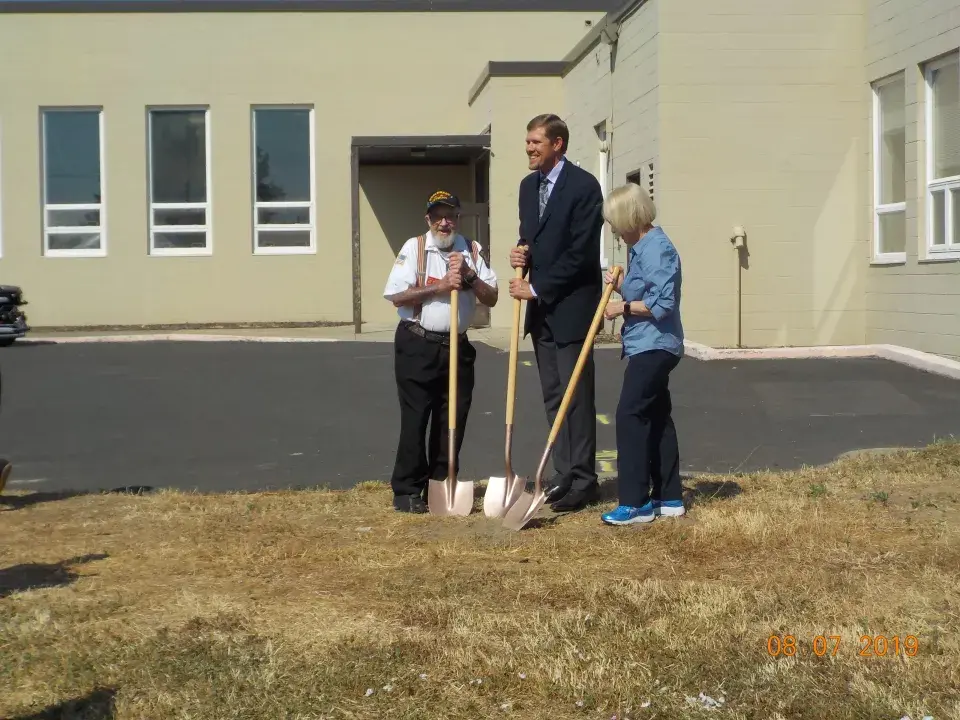
And in case you didn’t know, Chuck Austin served in the Marine Corps in World War II, Korea, and Vietnam. He was a remarkable local figure, and we’re grateful for his willingness to dedicate his name to the facility.
What were the biggest challenges you faced?
When we were heading down the path of not being able to get the deal done simply because we couldn’t complete the transfer, I pulled in staff from Senator Patty Murray’s [D-Wash.] office. Senator Murray had done the groundbreaking with us, so her staff said, “What do you mean this isn’t going to move forward?” Her staff worked on the situation for us, going back and forth with the HHS and the Washington Housing Finance Commission to figure out a solution.
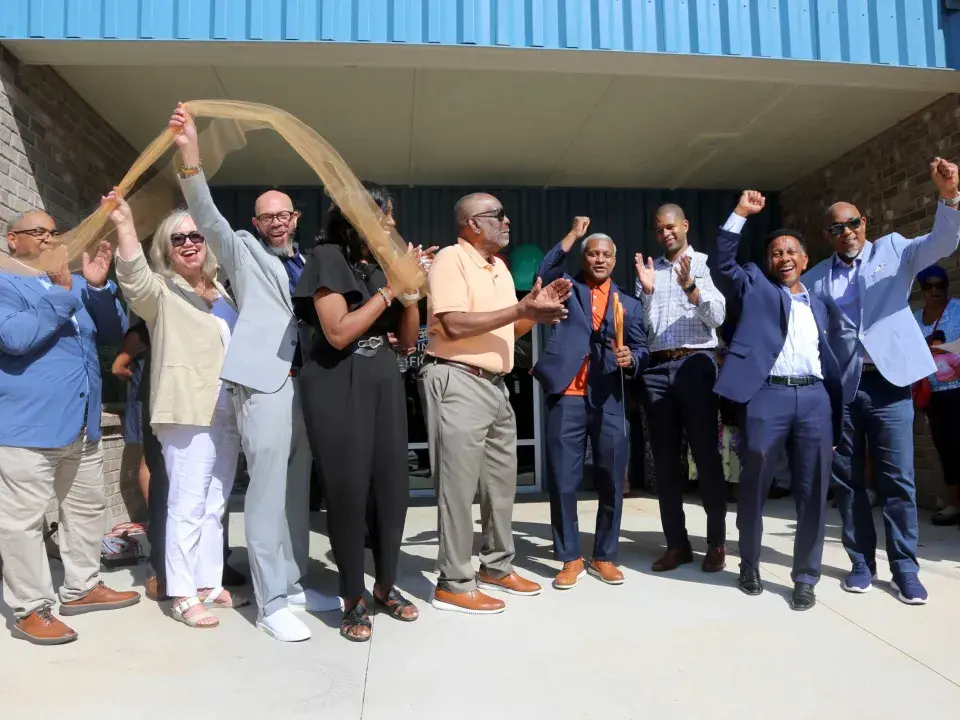
Getting to a point where it was going to move forward and meet the commitments we had made to our community — that was just massive. Representative Dan Newhouse [R-Wash.-04] was out multiple times to monitor the situation, before construction, during construction, and has been back a couple of times since. Senator Maria Cantwell [D-Wash.] was at the ribbon cutting at the end.
A few years on, what are the biggest learnings. Have you recommended this approach to other communities?
These facilities across the country are open to future development. I still think there is an issue that needs to be addressed for smaller nonprofits that are unable to easily access federal land, especially when it comes to meeting requirements for financial capacity and guarantee against potential change in use, as well as accessing sufficient capital to make such developments pencil out.
A couple of years ago, the chair of the House VA Committee came to visit, and he said these [transfers] should be replicated across the country in some way, shape, or form. I certainly agree with that, whether it’s for veterans or other individuals experiencing homelessness.
HHS is open to working with folks. What I’ve been trying to relay to anyone interested is to utilize these facilities for housing individuals experiencing homelessness, particularly when you can add services on site.
What are some key lessons learned for others looking to scale or replicate this approach?
A key lesson is to engage the community you’re building for. We did a design charrette with our veteran community and learned several things. For example, we had planned to wall off the west wing of a former classroom and use the corridor for unit entry ways. Our veterans pushed back immediately: “That’s the barracks. The last thing I want to do is live in a barracks again.” So, we redesigned it, which made it a much better facility.
Also, we worked on making the home pet friendly. We know that individuals experiencing homelessness oftentimes have a pet that is really their support when they feel everybody else has abandoned them. We wanted to make sure the design reflected that intent.
You received the site at no cost—can you explain how that works?
Initially, they’ll provide a lease to you until you get your financing in place. Once your financing is in place, the property is essentially transferred at no cost. There is an appraised value placed on the property, and they check with us every year to make sure we’re still using it for the same intended purpose. If we don’t, we have to pay that value back.
Acquiring the land and part of the facility itself at a discount helped with financial feasibility. When we’re talking about funding sources like Housing Credits and financing from the Washington State Housing Trust Fund, these are available for building housing. But when we start talking about the services on site, whether it’s the clinic or the office space, that’s not what those funding sources cover. Getting the land and facility at a discount, in addition to state-level resources for non-residential spaces, made it financially feasible to create community-serving spaces on the site, including the clinic.
What’s next? Are there other innovative plans in Yakima that were influenced by this?
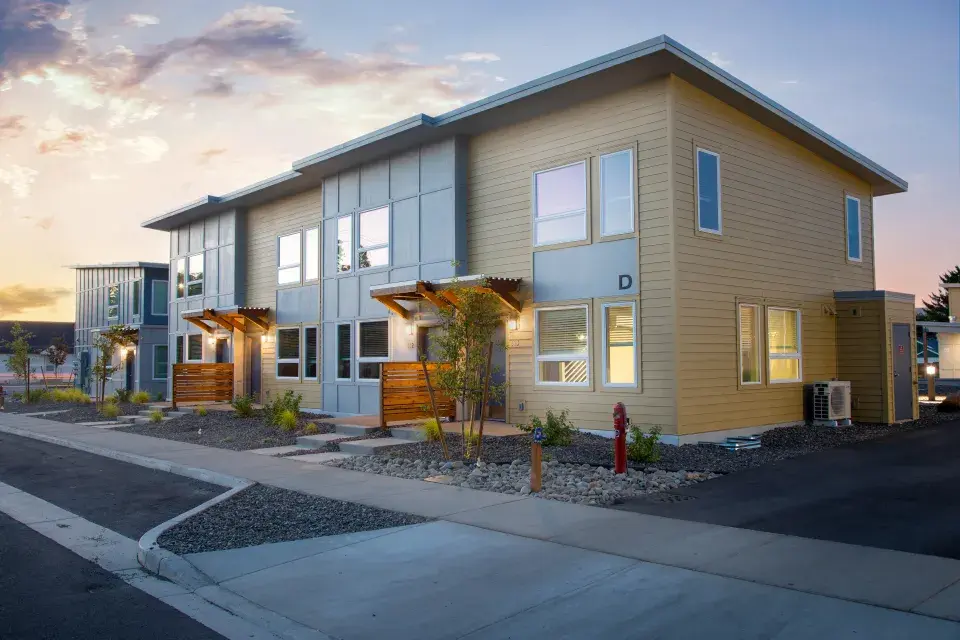
Since then, we’ve created another site near our office with 54 units of permanent supportive housing for individuals who’ve experienced homelessness, not specific to veterans. We were able to use the goodwill from Chuck Austin Place to do that. Chuck Austin Place was our first permanent supportive housing development, and it really helped spur all of that on.
Do you continue to get feedback and appreciation — or criticism — from the community about the development?
We do. As a public housing authority, we don’t typically reach out for donations, but people reach out to us constantly about this property. Because there is a gym on site where youth groups do indoor volleyball and soccer, and as part of their lease, we make sure they engage with the veteran community. We have a motorcycle group that does regular donations for veterans, and Quilts of Honor has come through to provide quilts. The level of support we’ve received really says a lot about the community we live in.
When you take a leap of faith like this, you can’t assume the community will come along with you. The senators and representatives at the state and federal level were invaluable, but so was the local community, who’ve really supported our veterans and the services provided there. That has probably been the biggest gift we’ve gotten out of this whole thing.