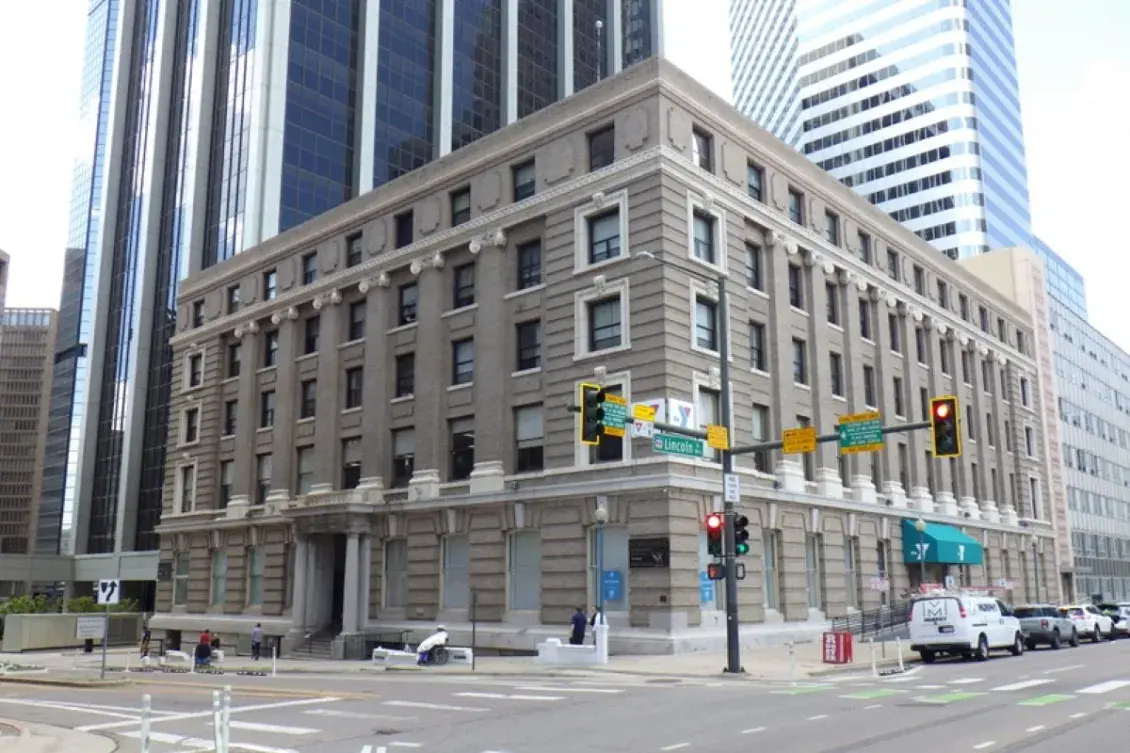
For more than two decades, a historic building in the heart of downtown Denver has lived a double life. On the upper floors, the Colorado Coalition for the Homeless (CCH) has operated the Civic Center Apartments, with more than 200 units of supportive housing. On the ground level below, the YMCA ran a gym, workout space, and community offices.
That arrangement dates to 2001, when the YMCA sold the majority of the 120-year-old building to CCH, retaining roughly 45,000 square feet for its own programs. In the years since, the two nonprofits have served thousands in that community with housing and recreational and wellness programs.
Now, that shared history is entering a new chapter. Earlier this year, CCH closed on the purchase of the YMCA's remaining portion of the building, setting the stage for a full renovation that will bring both sides under one mission and modernize supportive housing for residents.
A Catalytic Loan
To finance the acquisition, CCH turned to Enterprise Community Loan Fund's Denver Regional Transit-Oriented Development (TOD) Fund, securing $1.8 million in funding that covered the majority of the purchase price, with CCH providing the remaining equity.
This transaction also marks an important milestone for the community development financial institution of Enterprise Community Partners. It's the 30th loan from the CDFI’s TOD Fund, which has deployed over $74 million since its inception in 2010 to support the acquisition of transit-adjacent developments. The TOD Fund is a partnership among state and local housing agencies, philanthropic institutions, local CDFIs, and major banks, which has supported more than 3,100 affordable homes across a seven-county region.
Deals like this simply don't pencil out for traditional, market capital. That's exactly the gap the TOD Fund was built to fill. Without this kind of flexible, mission-driven capital, developments like this simply won't happen. The financing would be more difficult to secure, and the timeline wouldn't survive a competitive acquisition.
Joseph Mattingly, senior loan officer at Enterprise
Like the deals before it, the TOD Fund provided CCH with lower interest rates and flexible terms — the kind of essential, often hard-to-secure bridge financing that provides breathing room as developers assemble the financing stack for what comes next.
Beyond its favorable terms, the Fund’s transit-oriented focus is especially fitting for this property. The building sits diagonally across from the regional bus hub where Denver's transit lines converge each morning and within walking distance of the city's expanding rapid transit rail.
“People experiencing homelessness often don’t have their own vehicles, and we actually don't even have parking,” Cathy Alderman, CCH’s chief communications and public policy officer, said. “The transit orientation of this project is really critical for the residents who live here.”
A Transformation to New Homes
Of the 216 units CCH has operated in the building, the single room occupancy units have the highest vacancy, partly because the layout doesn't meet modern expectations for affordable housing.
“It has long been our intention to upgrade that part of the building and convert the SRO units into one-bedroom apartments or studio apartments, whatever might be appropriate and available from a funding and design perspective,” Jennifer Cloud, CCH chief real estate officer, said.
The planned upgrades are full reconfiguration. Every unit — shared SRO, private SRO without a kitchen, or studio lacking a full kitchen — becomes a studio or one-bedroom with its own kitchen and bathroom. The 40 shared SRO units will convert into 20 new one-bedroom apartments built into the former YMCA space. Without the additional square footage from the acquisition, that conversion would not have been possible.
The Y's old gymnasium, complete with a basketball court, becomes a flexible community space. The expansion also frees room for case management and property services, with hopes of opening some space to community partners serving the residents.
Renovation Without Displacement
A major renovation inside an occupied building raises an obvious question: where do people go while their homes undergo upgrades? CCH will rely heavily on one-way transfers within the building. Vacant units are renovated first, and each household moves directly into a finished unit, Cloud explained.
When that's not possible, CCH offers temporary relocation through extended-stay hotels or furnished apartments, or stays with friends or family, supported by a stipend. Every resident gets an individualized plan developed with a relocation consultant, given special consideration for how attached someone might be to a long-held unit. For residents who've called this building home for several years, personalized attention is essential.
What Comes Next
The YMCA acquisition was the first step in this ambitious project. CCH's exit strategy for the TOD bridge loan runs through non-competitive 4 percent Low-Income Housing Tax Credits, layered with historic tax credits. The building at 25 E. 16th Avenue was constructed in 1906 and added to the National Register of Historic Places in 2004, qualifying for historic preservation financing.
CCH owns and operates 21 residential properties across Colorado and is the largest permanent supportive housing providers in the state. Many of those properties involve new construction.
But this one is different. It's preservation and renovation, breathing new life into a piece of the city’s history rather than building from the ground up.
For the TOD Fund, it will continue to support developments that bring more affordable homes to Coloradans.
"We have additional transit-adjacent deals in the pipeline. Given that demand is outpacing funding availability, new philanthropic and financial partners can help turn mission-driven investments into more affordable homes and stronger communities," Mattingly said.
For the people who will eventually live there, it really comes down to home.
"This transformation will give these residents a real sense of stability and belonging," Alderman said. "Being this close to transit means they can get to work, appointments, and the grocery store on their own schedules. It helps residents become part of the community with greater connections to the services and activities that will help them stay stably housed."