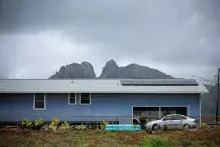
Historical Policies That Shaped Housing in Native America
The Fair Housing Act: An Updated Primer
Protecting Renters from Income Discrimination
Imagining a Racially Equitable Eviction Prevention Policy, Post-Pandemic
Overcoming Barriers to Successful Appraisals on Tribal Trust Land
The Link Between Historic Redlining And Current Climate Risks
Racial Inequities In The Mortgage Interest Deduction
We Need to Talk About Hawaii
Mitigating Extreme Heat Risk in Historically Redlined Areas
Last year was the hottest year on record , and 2024 has a one-in-three chance of being even hotter. As temperatures increase and climate change worsens, extreme heat events will occur with more frequency and intensity, having an outsized impact in dense, urban areas. Urban neighborhoods face increased temperatures due to building concentrations and a lack of green space, creating a phenomenon referred to as the urban heat island effect. Neighborhoods with a high number of low-income residents of color experience more intense heat island effects. This is not by chance, but is a result of deliberate, discriminatory housing policies that have impacted people of color, pushing them into vulnerable neighborhoods prone to extreme heat exacerbated by climate change.