Baltimore, MD — The University of Maryland Health and Recovery Practice (HARP) and Enterprise Community Development today announced a new collaboration to bring behavioral health treatment, harm reduction and social service navigation directly to residents along the Reisterstown Corridor in West Baltimore. The initiative pairs a community-embedded HARP clinical team with Enterprise Community Development's Metro Heights at Mondawmin property and the Liberty Square neighborhood to address opioid use and housing instability at the community level. The HARP positions are funded with an award from the Governor’s Office of Crime Prevention and Policy Performance Incentive Grant Fund.
The effort is focused on the Reisterstown Corridor in the 21215 zip code. Last year 21215 recorded 80 fatal overdoses, one of the highest rates in the city, and, in 2025, the Liberty Square, Mondawmin and Parkview/Woodbrook neighborhoods logged more than 500 calls for service related to narcotics and 113 for overdose. A goal of this effort is to provide the prevention resources that are critical to reducing overdose fatalities and drug-related calls for service.
For HARP, the partnership marks an expansion beyond its primarily clinic-based model into street-based outreach.
"This partnership allows us to bring our clinical team directly into the community, rather than waiting for people to find their way to us," said Orlando Wright, Director of HARP. "By embedding social work, peer recovery support and medication-assisted treatment along the corridor, we can reach people earlier, build the trust that clinical settings alone can't always establish and connect them to care before a crisis point."
For Enterprise Community Development, the collaboration reflects a broader argument the organization has been making across its Mid-Atlantic portfolio: that harm reduction and crime prevention strategies are not separate from the business of affordable housing, but essential to it.
"Affordable housing providers have to think about the long-term financial health of our buildings and the well-being of the people who live in them, and those goals are connected, not competing," said Sarah Ritter, Director of Community Safety Planning at Enterprise Community Development. "This partnership is a clear example of that. When we bring in partners like HARP and GMCC to address the root causes of instability, we're protecting our investment in these properties and building the kind of community our residents deserve — one marked by pride, power and belonging."
For the Greater Mondawmin Coordinating Council (GMCC), the initiative is a significant step in its role as a Quarterback organization with the Maryland Governor’s Office for Children’s ENOUGH Initiative, which funds community-driven strategies to address the root causes of poverty and violence in Baltimore neighborhoods.
"The ENOUGH Initiative is about preventing childhood poverty by addressing the conditions that destabilize families, and drug use and homelessness along this corridor are two of the biggest challenges," said Eli Lopatin, Executive Director of the Greater Mondawmin Coordinating Council. "As a quarterback organization, our job is to make sure resources reach residents through structures they trust and help shape.”
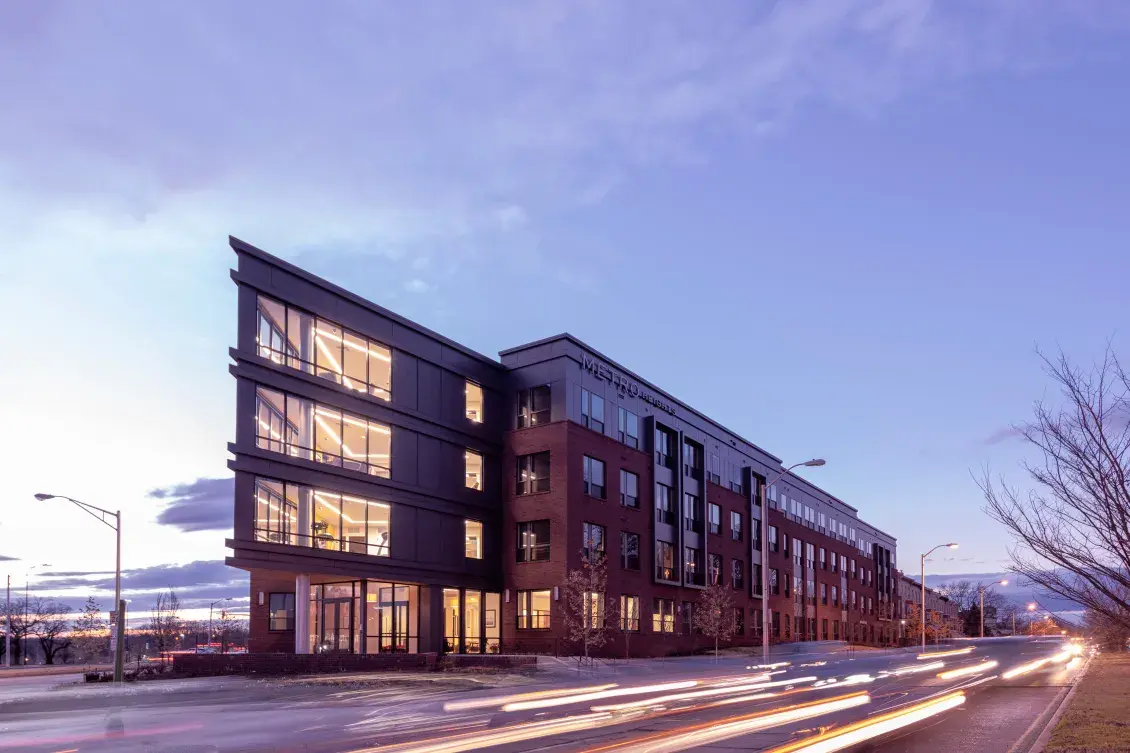
A community-based HARP team, including a social worker and a certified peer recovery specialist, will conduct regular street outreach, provide medication-assisted treatment and overdose prevention supplies, and connect residents to housing, benefits and workforce services. Enterprise Community Development’s Metro Heights at Mondawmin will provide an anchor location in the neighborhood for the HARP team to base their outreach efforts. As the ENOUGH grant quarterback, GMCC will connect this work to the broader strategy for the community-informed development of the surrounding neighborhoods.
###
About the University of Maryland Health and Recovery Practice (HARP)
Health and Recovery Practice, (HARP) program is a partnership between the University of Maryland Faculty Physicians and the University of Maryland School of Medicine created to improve the health and well-being of individuals who use or have used drugs. HARP provides comprehensive primary care in a trauma-sensitive, team-based environment while serving as a teaching and research clinic for substance use recovery.
About Enterprise Community Development
Enterprise Community Development is a mission-driven organization that specializes in high-impact residential development, preservation, property management and resident services. Enterprise Community Development is committed to preserving existing affordable housing and creating new affordable housing opportunities for individuals and families across the Mid-Atlantic. Its mission is to make home and community places of pride, power and belonging, and platforms for resilience and upward mobility for all, driven by the belief that access to safe, affordable housing provides the foundation for people to prosper and contribute to their communities. Residents are at the heart of Enterprise Community Development's work and central to its mission; Enterprise Community Development serves more than 23,000 people who call its communities home. Its $1.3 billion portfolio includes 117 communities and 13,000 homes across the Mid-Atlantic, making Enterprise Community Development the sixth largest nonprofit owner of affordable housing in the United States.
About the Greater Mondawmin Coordinating Council (GMCC)
The Greater Mondawmin Coordinating Council, Inc. (GMCC) was incorporated in 1976 by local residents to create an umbrella organization representing the community associations and block clubs clustered around the Mondawmin Mall. Reincorporated in 2000, the GMCC now represents eight active, affiliated neighborhood organizations. GMCC’s mission is to mobilize residents and lead programs to create equitable neighborhood change and strengthen community leadership.