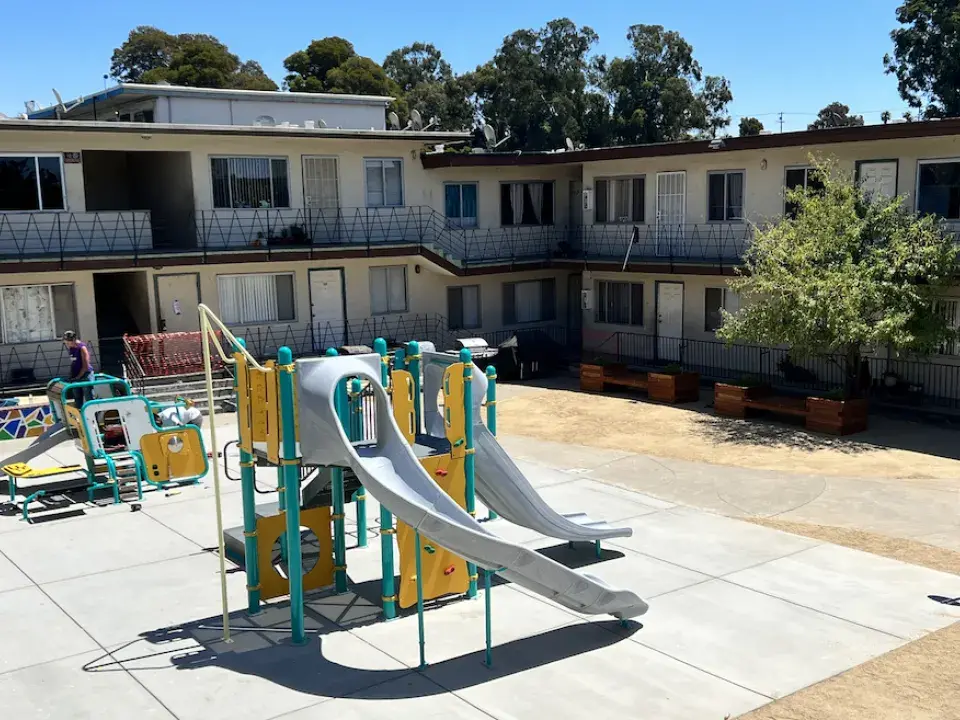
Across the country, communities are turning to a bold strategy to combat rising housing costs, displacement and homelessness: The preservation of unsubsidized affordable housing occupied by low-income residents, also known as acquisition-rehabilitation. The unique characteristics of acquisition-rehabilitation – such as working with tenants in place and preserving a smaller and aging building stock as permanently affordable – require a tailored approach and multi-sector support and investment.
Between 2012 and 2017, the Bay Area alone lost roughly 32,000 unsubsidized affordable homes per year, an indicator of rapidly increasing housing costs and the displacement of long-time residents from the region. Building upon lessons learned from community-based organizations and public agencies that have implemented effective programs and practices, this report offers guidance for building an effective preservation ecosystem with the goal of scaling this approach across the region.
Five key recommendations have emerged from the study:
- Secure funding and financing beyond local subsidy programs
- Strengthen and build partnerships among the diverse stakeholders involved in this work
- Support capacity building for the unique aspects of occupied acquisition-rehab
- Pass complementary policies at the state and local level, such as right of first offer/refusal policies
- Improve and develop new tools for practitioners and residents to help guide local efforts
The Learning Center’s resources and all data and information provided therein (collectively, “Content”) are for general informational purposes only. All Content is provided “as is” and may no longer be current or up to date. Enterprise Community Partners, Inc., its subsidiaries and affiliated entities (collectively referred to as “Enterprise”) as well as any co-authors of any Content disclaim all liability for any errors or omissions and make no warranties or representations of any kind, either express or implied, regarding the accuracy, adequacy, validity, reliability, availability, or completeness of any Content presented. All Content should be independently verified by you before relying on it. The Content does not constitute professional advice or services (including but not limited to legal, financial, tax, or investment advice).
- Case Study