In 2019, David Goldstein, a mechanical engineer specializing in HVAC systems, was grappling with an all-but-impossible problem: how to make an aging New York housing block energy efficient without forcing residents to move out during construction.
At the time, Goldstein was working on a pilot project for New York City’s housing authority aimed at upgrading the HVAC systems and insulation of a post-World War II affordable housing building. The effort was in line with the city’s ambitious goal of reaching carbon neutrality by 2050 — but cutting greenhouse gas emissions wasn’t the only concern.
Sound HVAC systems are closely tied to residents’ health and well-being. Goldstein was acutely aware of the risks families face when a faulty central heating system pushes them to rely on space heaters, sometimes with deadly consequences. He also understood how crushing utility costs can be for households with lower incomes.
Growing Energy Burden
According to the 2024 Residential Energy Consumption Survey, 33% of U.S. households are energy insecure, meaning they struggle to meet their heating and cooling needs. A quarter went without food or medicine to keep the lights or heat on, and 12% received a disconnect notice.
While an unpaid bill can lead to an eviction, efficient insulation can bring significant economic relief to families. Yet improving those systems at scale seemed daunting. Goldstein saw firsthand how difficult retrofitting could be.
“It involves working on the envelope because the buildings tend to be very leaky,” he said. “You also need to run new piping across it. It’s all very expensive, labor intensive, and disruptive for people who sometimes must move out for a while.” Scaling a small pilot project into a citywide decarbonization program felt like a moonshot.
A Breakthrough Moment
Then, inspiration struck. “It randomly occurred to me to wrap a building in a heated blanket,” Goldstein said. This was his Eureka moment. Now, he had to bring this vision to life. After a great deal of engineering, troubleshooting, and iteration, he came up with a concept he called HydroShell.
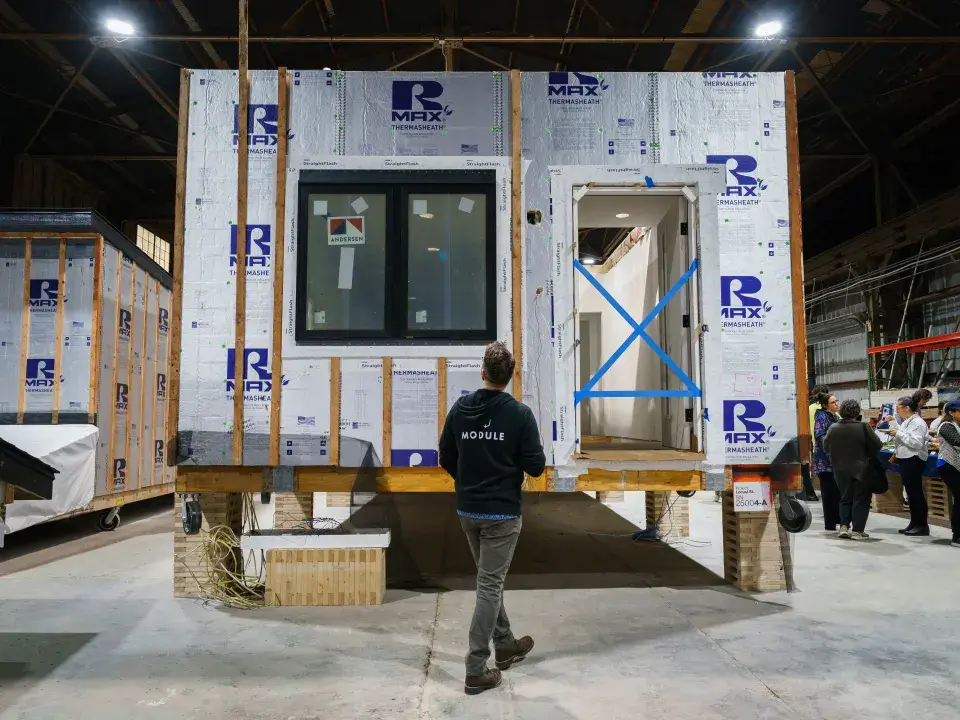
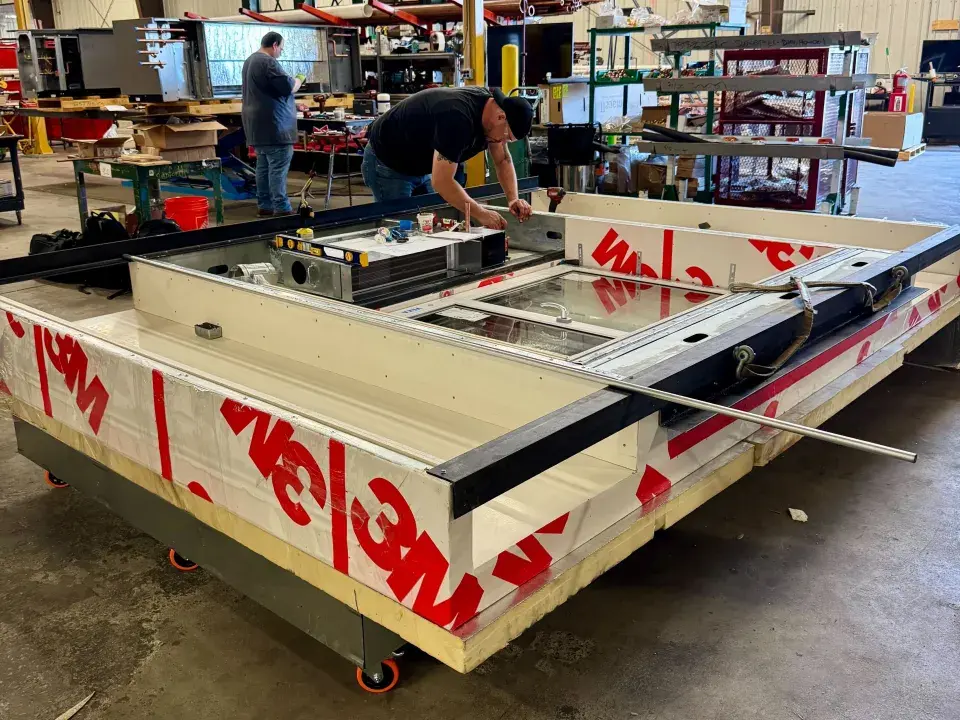
The innovation consists of prefabricated panels that bolt directly onto a building’s exterior, creating a highly insulated second skin. But that’s not all. Embedded within the panels are pipes connected to central heat pumps, circulating hot or cold water to regulate indoor temperatures. Behind each panel, ducts from a central ventilation unit push clean, filtered air into individual units.
Once installed, the pipes connect to one another, forming a seamless network that brings heat in the winter and cooling in summer. Because they’re prefabricated, installation can be streamlined. Multiple panels can be mounted in a single day — without the need for large crews of masons, carpenters, glaziers, plumbers, and other specialists.
The system promises to cut the costs of retrofitting aging properties in half and reduce a building’s heating bills by more than 80%.
Goldstein knew he was after something revolutionary. He patented the invention, and, in May 2020, quit his job to launch a startup, Hydronic Shell Technologies.
“I didn’t have any experience running a company, but I knew it would work out,” he said. “That’s how much I believed in the idea.”
A Major Grant Spurs Momentum
As Goldstein sought partnerships and funding, he received encouraging feedback. Some early prizes and grants kept the project moving forward.
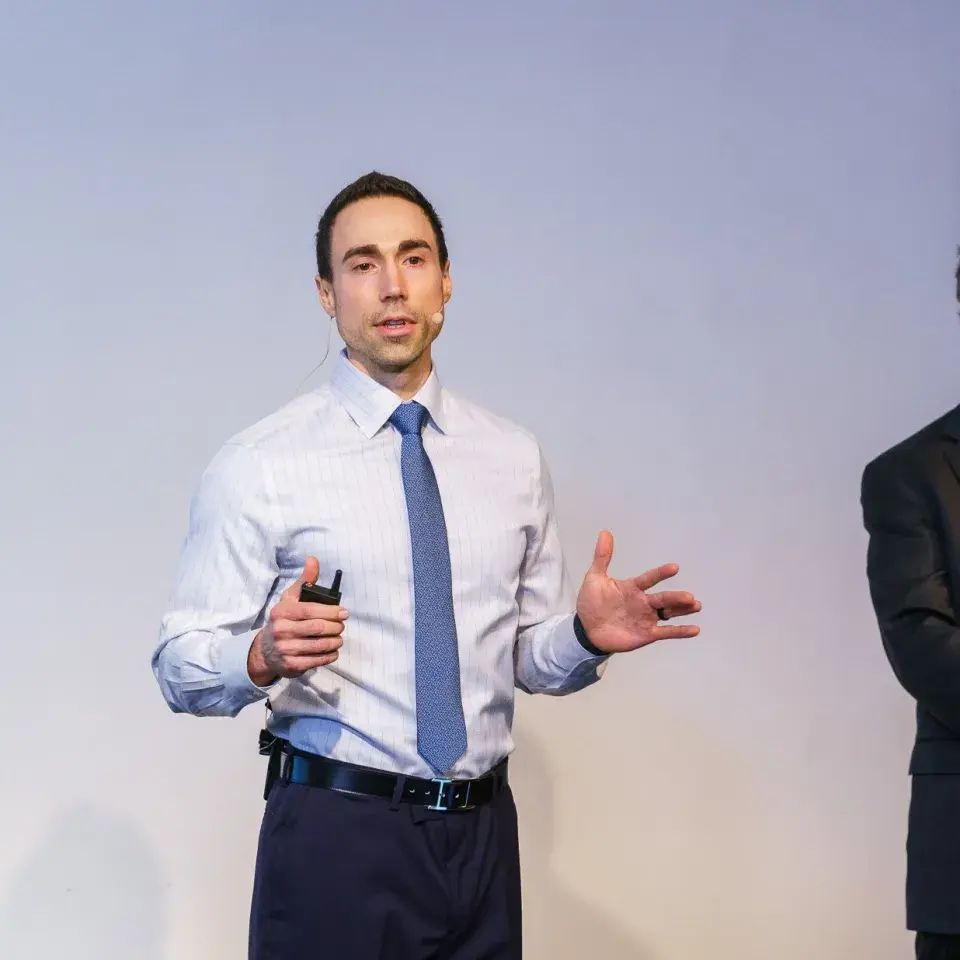
But the real leap came in 2024, when Hydronic Shell won a major grant from the Housing Affordability Breakthrough Challenge, an innovation competition made possible by Wells Fargo and managed by Enterprise.
“That changed everything for us,” Goldstein said. “With those $3 million, we really started to gain momentum.”
Beyond financial support, the challenge’s peer learning and cohort experience have proven invaluable. Goldstein especially enjoys the annual convening with fellow grantees.
“It's a group of people doing innovative things, and we sometimes run into similar difficulties,” he said. “There are workshops and speakers focused on how to overcome challenges, how to communicate better, and other soft skills you need around innovation. That’s been very helpful.”
Hydronic Shell’s first project was slated to be the retrofit of a seven-story apartment building in Syracuse, N.Y. — a $10 million effort designed as a full-scale test and public showcase for the HVAC panel system.
But at the last moment, funding from the Inflation Reduction Act and the Department of Energy’s BENEFIT program was withdrawn. Those funds would have covered roughly a third of the project’s cost, forcing Hydronic Shell to put the effort on hold.
“That created a big hole in our funding stack, and we haven’t found a way to fill it,” Goldstein said.
Pivoting to Keep Moving Forward
The setback hasn’t derailed the company’s progress. Goldstein remains focused on finding the right opportunity to pilot his innovation on a full retrofit project. He sees it as a critical step toward proving how affordable housing can become healthier, more comfortable, and far more energy efficient — without displacing residents.
“Ultimately we're going to find that first project,” he said. “Our hope is that federal policy shifts back again to support decarbonization. And when that happens, you know we'll be ready to deploy and scale.”
Goldstein is also exploring ways to adapt the HVAC panel concept for new construction. He believes the timing is right.
“People have become more aware of ventilation needs and the importance of indoor air quality,” he said. “But efficient HVAC systems tend to be expensive. The real benefit of what we're offering is that the HVAC system and the envelope panels are prefabricated as one assembly. That makes the installation of a very high-performance HVAC system much quicker and more affordable.”
Building a Prototype in the State’s Capital
Hydronic Shell is currently using part of its Breakthrough Challenge grant to launch HydroLab, a two-story demonstration building in Albany, N.Y.
The site is on track to receive its first visitors starting this fall.
“Our idea is to bring people to see the system and understand how it works,” Goldstein said. “HydroLab will also be an R&D asset to continually improve our products, develop different versions, and test them out.”
Sebastian Escalón is a journalist, audio producer, and science writer based in Massachusetts.