In 2018, Enterprise launched the Frey Fund, a flexible financing tool that provides catalytic capital to mission-driven affordable housing developers across New York state. Named in honor of Bill Frey, founder of Enterprise’s New York office, the Fund has played a crucial role in enabling community development corporations (CDCs), minority- and/or women-owned developers, and nonprofit organizations to take on larger projects, bridge early-stage gaps, and build the capacity needed to strengthen their communities.
We spotlight borrowers whose work has been made possible through the Frey Fund, sharing how flexible capital can catalyze development across a variety of communities and development scenarios.
The Frey Fund has lent $10.1 million dollars to 12 mission-driven developers across all five boroughs, creating 5,160 units of affordable housing, including 1,344 units of supportive housing and homes for formerly homeless New Yorkers.
Spatial Equity Co: Flexible Capital Across Multiple Developments
Founded in 2020, Spatial Equity Co. is a social-impact, minority-owned community developer based in New York City. Employing a wholistic spatial design approach, SPEQCO develops affordable housing, family-owned retail, and critical community facilities in underserved neighborhoods. Founder Teghvir (Teg) Sethi launched Spatial Equity as an extension of his family’s 30-year-old real estate business, driven by a commitment to affordability and inclusion. For Sethi, one of the biggest challenges in affordable housing development lies in the pre-development stage, when tough negotiations take place and every available dollar must be stretched to cover critical work.
Frey Fund Loan: $750,000 to accelerate predevelopment across multiple projects.
Van Sinderen: Critical Gap Financing in Brooklyn
Spatial Equity’s Van Sinderen project will deliver 167 affordable units to East New York. In collaboration with partner HousingPlus, the project includes supportive housing units for women impacted by the criminal legal system, as well as veterans.
Spatial Equity faced a delay in closing, with the site not yet vacant which prevented them from accessing critical predevelopment funds. The Frey Fund stepped in to bridge that gap, providing critical capital to keep the project on track.
“It was instrumental in being able to push the project forward” said Sethi, “and that is the theme for all of the other projects too.”
With the loan, Spatial Equity was also able to negotiate with a neighboring property owner to expand the site, adding 26 additional units and creating space for a private pedestrian plaza, completely transforming a block near a future Interborough Express (IBX) transit station. Since the loan’s closing, Spatial Equity has also closed on construction financing with site work underway. Enterprise Community Investments also invested LIHTC equity into the deal, deepening Enterprise’s partnership with Spatial Equity.
Hillside Grove: Added Capacity on Staten Island
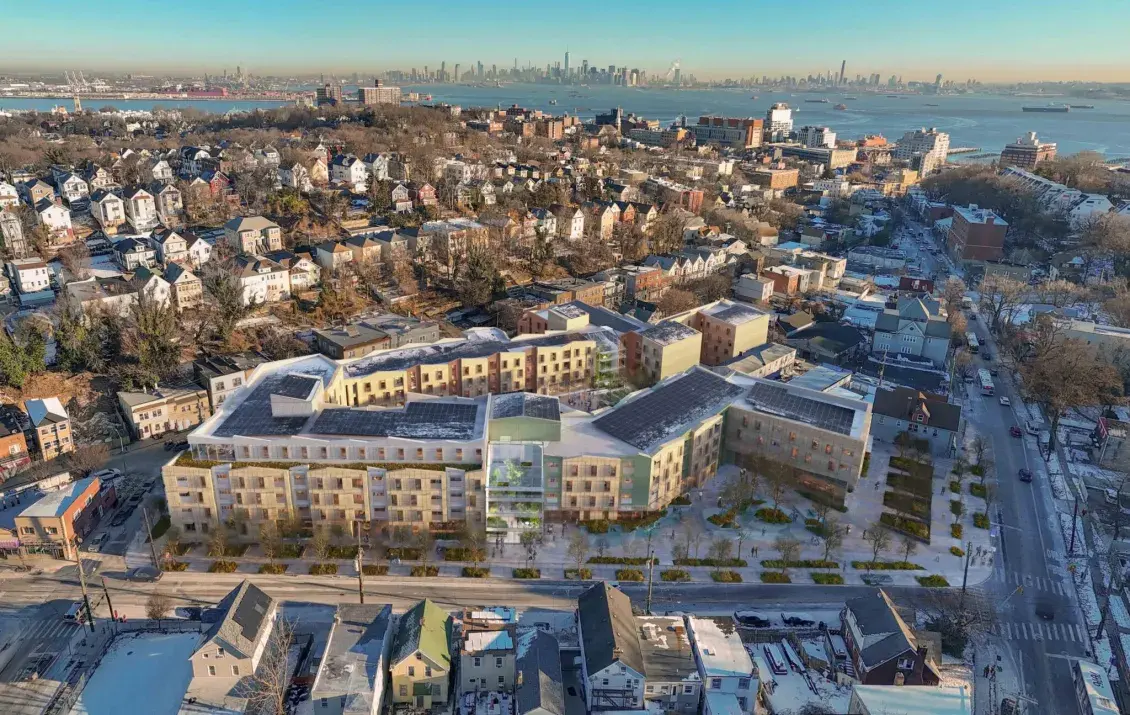
Built on the site of a former Department of Sanitation garage, Hillside Grove will be a multiphase development that includes affordable, senior, and homeownership units to Staten Island, which lags behind other New York City boroughs in affordable housing production. Spatial Equity won a competitive city Request for Proposals (RFP) to develop on the site but then needed financing for pre-development work. With the Frey Fund loan, Spatial Equity was able to independently move forward with design work, which prevented the need for a more complicated, multi-stakeholder agreement. This significantly reduced the development timeline overall and freed up capacity to improve the project, with Sethi successfully negotiating to add 50 additional units because of the City of Yes zoning enhancement, growing the project from 240 to 290 homes.
As Sethi described it: “It’s the mindset of having additional capital to go after opportunities and negotiate hard.”
CAMBA Housing Ventures: Year 15 Preservation
Founded in 1977, CAMBA began addressing the city’s most marginalized populations by providing comprehensive social services, followed by transitional and permanent supportive housing. In the years since, CAMBA has grown into one of Brooklyn’s largest community-based organizations and launched its own development arm, CAMBA Housing Ventures (CHV).
Frey Fund Loan: $500,000 to fund predevelopment to make ‘Year 15’ renovations to preserve affordability for a 100-unit building.
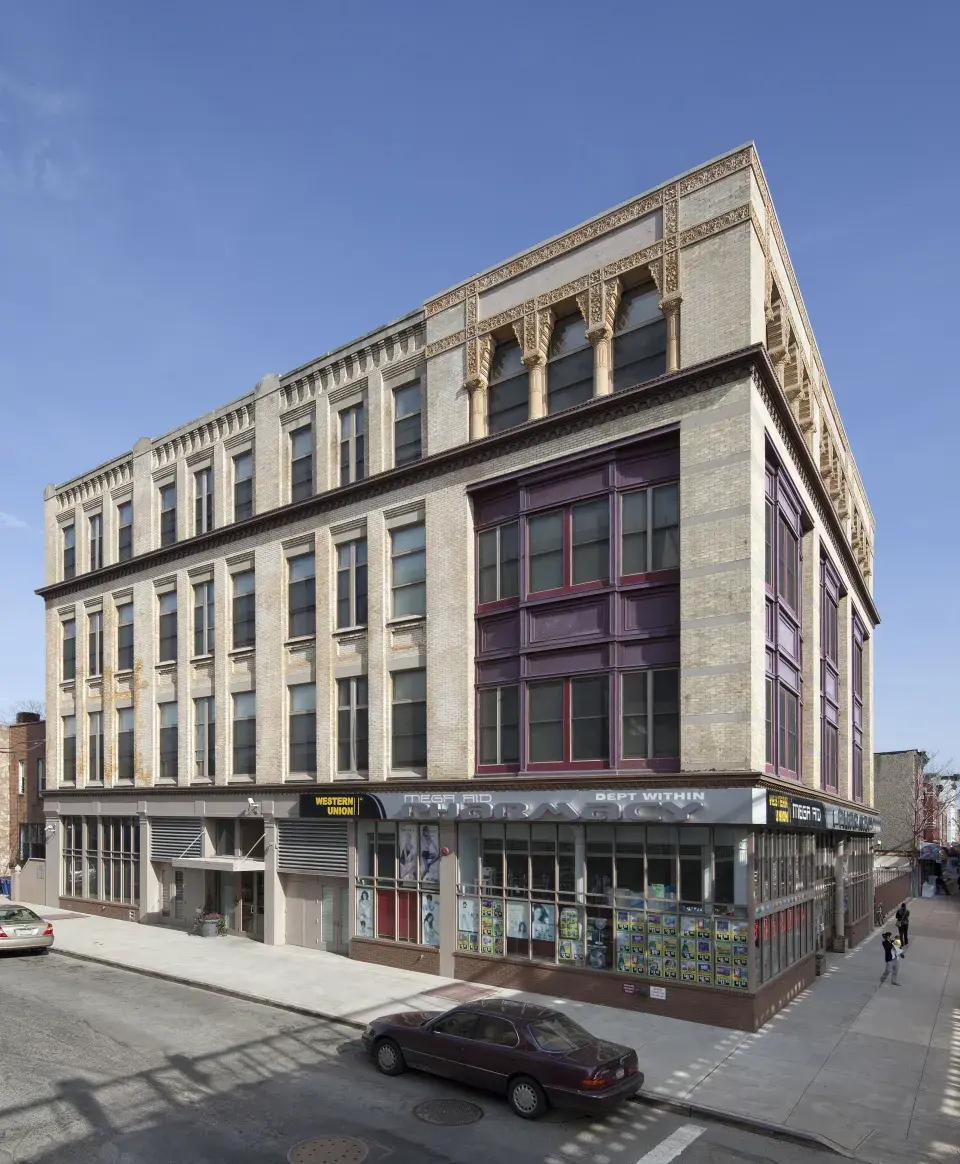
For one CAMBA/CHV development, a flexible Frey Fund loan came at the right time. 880 Willoughby is a 100-unit affordable housing building in Brooklyn with 60 units set-aside for formerly homeless New Yorkers with disabilities. The property required ‘Year 15 preservation’ which occurs when the Low-Income Tax Credit (LIHTC) investor exits a deal after 15 years. To preserve the property long term, CAMBA/CHV would have to make extensive repairs and energy upgrades to enhance resident safety and comfort.
This project, like many across New York City, was impacted by the COVID-19 pandemic, which caused the building’s commercial space to become vacant. This vacancy, along with rising operational costs, forced the organization to focus on covering expenses rather than looking forward towards predevelopment for 880 Willoughby. CAMBA/CHV described the unsecured Frey Fund loan as coming at the right time, with a quick and seamless execution.
The loan bridged predevelopment expenses, allowing CAMBA/CHV to move towards a construction closing. CAMBA/CHV said that without the loan, they would not have been able to pay their architect. CAMBA/CHV has been able to move the project along and signal their readiness to HPD’s Year 15 team.
The loan’s flexible funding also freed up cash for CAMBA/CHV to pursue other development opportunities, multiplying the organizations’ community impact.
Milestone Development: Faith-Based Development
Milestone Development, a New York-based development firm, was founded in 2023 by CEO Aaron Koffman. Milestone's approach emphasizes thoughtful design and environmental stewardship, sustainability, community engagement, and respect for each and every resident. The firm prioritizes holistic community development, integrating supportive services such as counseling, job training, and healthcare access to ensure resident well-being and dignity.
Frey Fund Loan: $545,000 from Enterprise to accelerate predevelopment on a faith-based project
In collaboration with community service organization SelfHelp and the Brooklyn-based Calvary Community Church, Milestone Development conceived Calvary St. Johns, a new, 250-unit affordable senior housing development on land currently owned by the church in Crown Heights, Brooklyn. Thirty percent of the units will be set aside for formerly homeless seniors. This new building will also include a new community facility space on the ground floor owned by Calvary Community Church. The building will be transformational for the community, creating deeply affordable homes for older adults while simultaneously revitalizing a long-standing church property.

For Calvary St. Johns, Milestone will secure financing through LIHTC, as well as the HPD SARA program, HDC tax-exempt bonds and other sources. Still, gap funding was needed for critical predevelopment needs. With its Frey Fund Loan, Milestone was able to accelerate many of its predevelopment activities, including design, engineering, borings and more.
“I had the pleasure and honor to meet Bill Frey early in my career and I was so impressed by how approachable he was to the younger generation of housing professionals despite his unparalleled track record of community investment in New York,” said Koffman. “Thank you, Enterprise, for helping this state-of-the-art development take a major leap forward in becoming a new home for almost 300 New Yorkers in the near future.”
The loan also opens the opportunity for Milestone to access Enterprise’s full capital business line further down the road, as Calvary St. Johns advances towards construction closing.
Filling Critical Gaps
Across a diverse set of projects, the Frey Fund allowed our mission-driven affordable housing developer partners to go above and beyond during the predevelopment process. This flexible, early-stage capital enabled these firms to take on ambitious projects in multiple boroughs—building more homes, securing better terms, and pursuing community-centered design. The Frey Fund’s catalytic capital fills critical gaps, demonstrating what’s possible to advance a more equitable New York and support long-term affordable housing that strengthens underserved, resident centered communities.