Across the United States, the median net worth of a renter is just $11,000. For renters of color, it is barely above $4,000. Behind these numbers are everyday realities: living paycheck to paycheck, fearing the next utility bill, bracing for rent increases – and having little, if any, wealth to pass on to your children.
Homeownership can help ease these pressures by enabling families to build equity over time. According to Realtor.com, homeowners have roughly 43 times the net worth of renters. Yet in one of the toughest housing markets in decades, that pathway is increasingly out of reach. Homes sales in 2025 fell to a 30-year low, driven by rising prices, high mortgage interest rates, and ongoing economic uncertainty.
Homes for the Future, an innovative fund created by Grounded Solutions Network, is working to create a homeownership trajectory in this challenging environment.
How it Works
Homes for the Future’s model borrows a strategy commonly used by private equity firms – but with a different end goal. The fund purchases portfolios of single-family properties at scale. The homes are then held and operated as rental properties and gradually transition to homeownership opportunities for residents at below-market prices.
“We are using the tools that private equity firms developed and repurposing them for community benefit rather than private gain,” explains Devin Culbertson, vice president of innovative finance at Grounded Solutions Network.
In 2023, the innovation was a winner in the financing category of the Housing Affordability Breakthrough Challenge, a national competition managed by Enterprise with support from Wells Fargo.
Under this model, residents will rent their home for up to 10 years. This lease-up period serves two purposes: it strengthens the financial viability of the portfolio investment and gives families time to prepare for ownership. Over time, household incomes will generally increase, improving mortgage readiness.
A portion of monthly rental payments supports the cost of the loan and builds equity. When certain affordability and readiness thresholds are met, the renter is offered the opportunity to purchase the home at below-market value.
Keeping Homes Affordable
Houses are sold under a shared equity model, which preserves long-term affordability. In exchange for purchasing at a reduced price, homeowners agree to limit the amount of appreciation they can realize upon resale. Future home sales are similarly restricted, ensuring the home remains in reach for new buyers.
This approach preserves affordability across multiple ownership cycles.
“It's really an asset-first program,” says Culbertson. “It's about buying the right homes and putting them on a trajectory to long-term community benefit.”
Another distinguishing feature is Homes for the Future’s capital structure. Because homes remain rental assets for an extended period, investors receive a return. This approach allows Homes for the Future to unleash the power and scope of for-profit investments while expanding access to homeownership.
“We're not offering market-rate real estate returns; we’re transparent about that. There is something that investors must give up to create a community benefit,” says Culbertson.
“Looking at comparable investments, it feels pretty on par when you think about risk-adjusted returns, he said. “The investments are sound, so while the return may feel a little lower, it's not deeply concessionary when you think about the risk profile.”
Proof of Concept
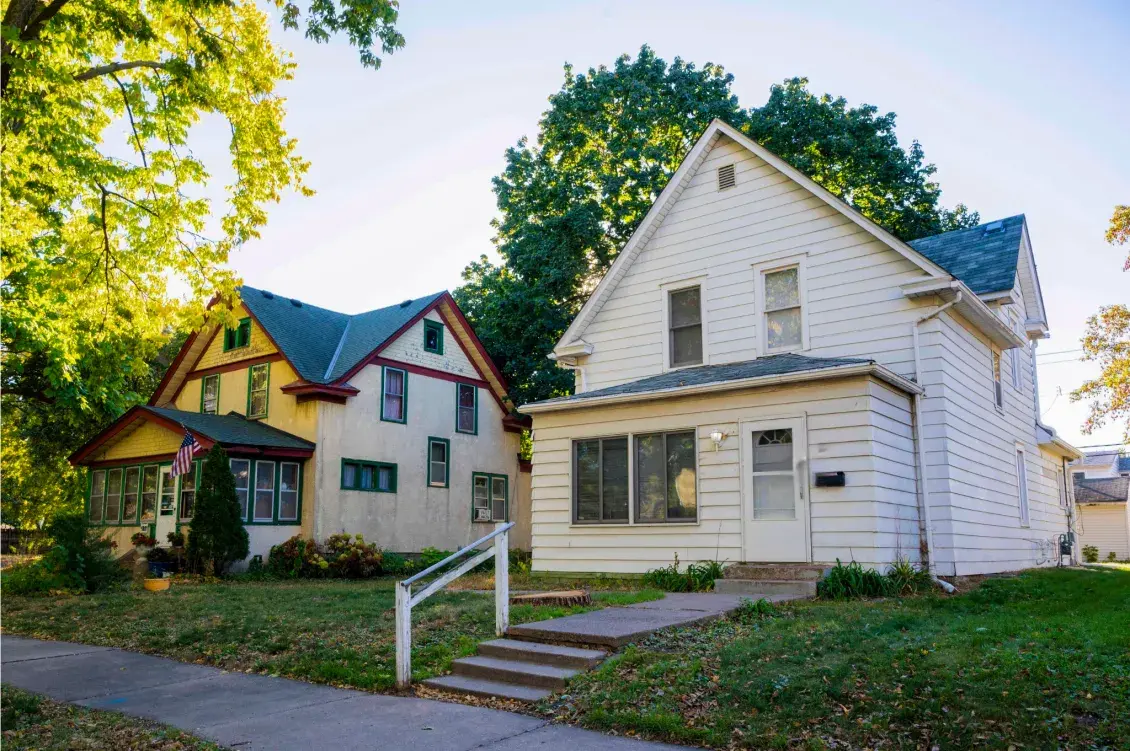
The opportunity to test this new concept came in 2024, when Homes for the Future got notice of a huge portfolio of houses being sold in Minneapolis and Saint Paul. Homes for the Future invested alongside five other nonprofits in the $61 million acquisition of 283 single-family homes in the Twin Cities area. Homes for the Future serves as a special asset manager, facilitating sales to interested local community land trusts.
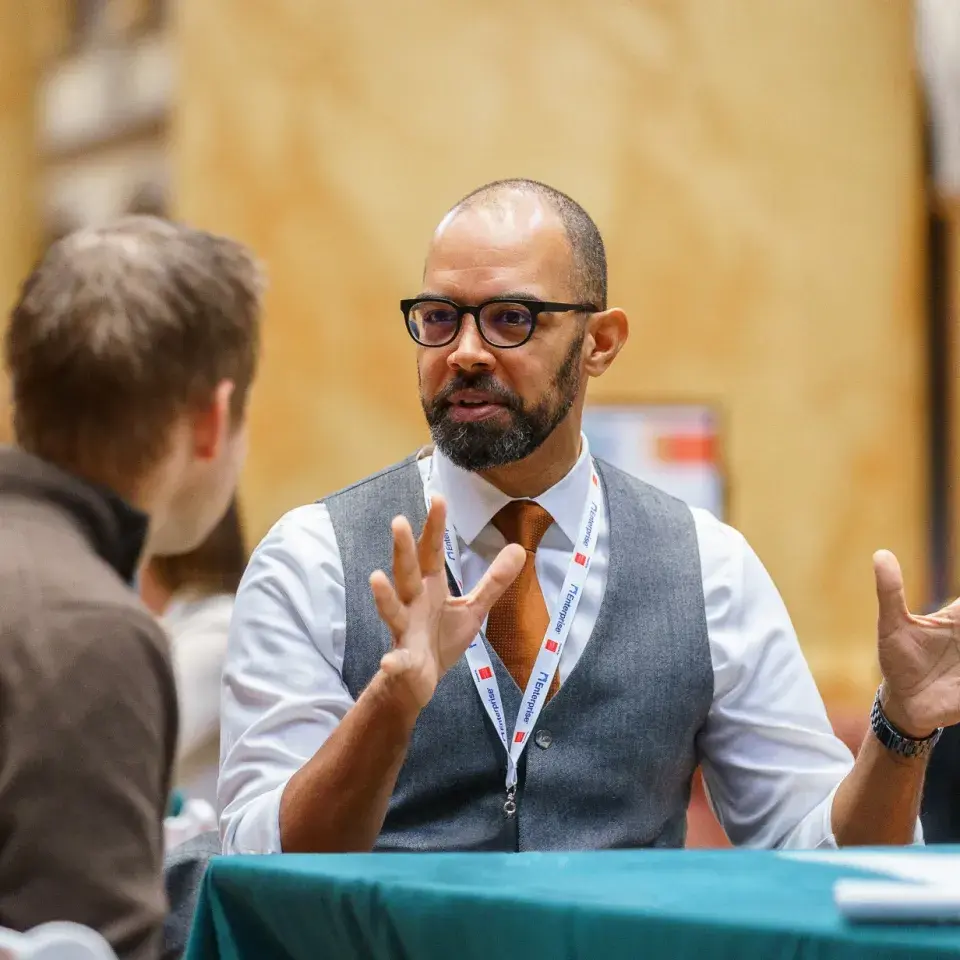
“These are all homes that are appreciating fast. They’re located in communities that have higher-than-average concentrations of people of color and lower-than-average incomes,” says Culbertson, adding that the diverse mix includes many first- and second-generation families.
The initial portfolio has allowed Homes of the Future to refine its model.
“We've learned a lot about how to better align with local partners and with local subsidy resources,” says Culbertson. “Now, it's about preparing some of the folks to buy the home they're in, and for others, helping them buy something else.”
Local organizations play a key role by delivering homebuyer readiness services, including financial counseling, budgeting assistance, and education on home maintenance. They also help households access down-payment assistance and other financial resources and incentives.
A Pivotal Prize
The $3 million award from the Housing Affordability Breakthrough Challenge was key to helping Homes for the Future make its first investment.
“Wells Fargo's financial firepower and Enterprise's expertise were a wonderful combination. It got us meetings we would not have gotten otherwise, and opened doors to people who are now partners and investors,” says Culbertson.
Homes for the Future is currently assembling the capital stack for its next acquisition in Atlanta, targeting 75 homes, with closing expected by the end of the year. Beyond Atlanta, the fund is exploring opportunities in high-growth markets in Texas, North Carolina, and Colorado — regions where strong job markets are coinciding with rising housing costs and higher barriers for first-time buyers.
Looking ahead, Culbertson and his team say the potential for scalability is huge, estimating that as many as one million single-family houses could ultimately be transitioned from investor ownership into owner-occupied homes through this model. That’s the moonshot for Grounded Solutions Network.
“We can reach a good share of that million units if we can activate the tools and the capital to get there,” he said.
For those future homeowners, the impact will be profound: access to a stable, appreciating asset – and a pathway to generational wealth.
Sebastian Escalón is a journalist, audio producer, and science writer based in Massachusetts. Read his story about Housing Affordability Breakthrough Challenge winner Hydronic Shell Technologies' energy-saving HVAC innovation.