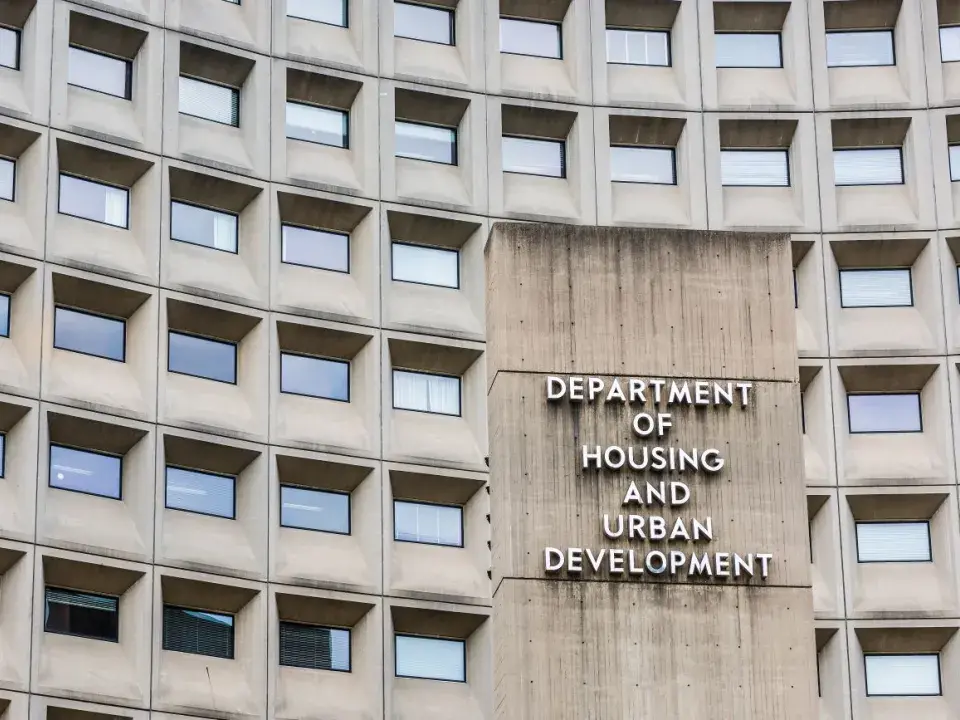
In January 2026, House and Senate Appropriations Committees released their fourth and final package of spending bills, known as a minibus, which contained FY26 HUD program funding levels. The bipartisan and bicameral bill aligns more closely with the Senate proposal and rejects many of the drastic cuts and proposals to consolidate rental assistance and homelessness programs that were included in the President’s Budget Request. The bill also avoids many of the cuts that were proposed in the House bill, such as those made to the HOME Investment Partnership program.
The Transportation, Housing, and Urban Development (THUD) bill in this minibus package provides $77.3 billion in new budget authority for HUD, $8.6 billion above what the agency is funded at for FY25 under the full-year Continuing Resolution. This minibus package is expected to be signed into law ahead of the January 30 deadline.
This bill also provides overall higher amounts for rental assistance programs than both the House and Senate proposals, which should be sufficient to renew all existing contracts.
A breakdown of the affordable housing and community development spending levels can be found in our Housing and Community Development Appropriations Budget Chart. Here’s where funding for some of HUD’s key programs stands compared to last year’s budget:
- $38.4 billion for Tenant-Based Rental Assistance (Housing Choice Vouchers), a $2.3 billion (6%) increase from FY25.
- $18.1 billion for Project-Based Rental Assistance, a $1.6 billion increase (10%) from FY25.
- $8.3 billion for Public Housing Fund, a $491 million (6%) decrease from FY25. This total includes $4.7 billion for the operating fund, $788 million (14%) below FY25. However, $337 million is provided for need-based allocations to PHAs that experience or are at risk of financial shortfalls, which is a $312 million above last year. $3.2 billion is provided for the capital fund, level with FY25.
- $1.03 billion for Section 202 Housing for the Elderly, a $99.6 million (11%) increase from FY25.
- $287 million for Section 811 Housing for Persons with Disabilities, $30.3 million (12%) above FY25.
- $7 billion for the Community Development Fund (CDF). Of this, $3.3 billion is allocated for the CDBG, which is level with FY25. An additional $3.62 billion in CDF is for earmarks and congressionally directed spending projects. The bill also includes $50 million for the PRO Housing Grants program, $50 million (50%) less than what was provided in FY25.
- $1.25 billion for the HOME program, level with FY25. Both the President’s Budget Request and the administration proposed to eliminate the HOME program.
- $4.42 billion for Homeless Assistance Grants, $366 million (9%) above FY25 enacted. This includes $290 million for Emergency Solutions Grants (ESG), level with FY25, and $4 billion for Continuum of Care (CoC), which was $518 million (15%) above FY25.
- The bill includes important language directing HUD to renew FY25 CoC grants over a specific timeline, as well as some instructions for the FY26 CoC NOFO.
- $1.35 billion for Native American Programs, $10 million (1%) above FY25. This includes $1.11 billion for the Native American Housing Block Grant formula program and $125 million for the competitive program, $25 million (17%) below FY25.
- $156 million for the Family Self-Sufficiency (FSS) program, $15.5 million (11%) above FY25.
- $86.4 million for the Fair Housing Activities, level with FY25. The bill provides funding for the Fair Housing Assistance Program ($26 million), National Fair Housing Training Academy ($3 million), and the Limited English Proficiency Initiative ($1 million). The bill also maintains funding for the Fair Housing Initiatives Program (FHIP) at $56 million.
- $46 million for the Section 4 program, a $4 million (9.5%) increase from FY25.
- $25 million for the Choice Neighborhoods Initiative, a $50 million (67%) decrease from FY25.
- The FY26 THUD bill provides no new funding for the Preservation and Reinvestment Initiative for Community Enhancement (PRICE) program, which is a decrease of $10 million from FY25.
U.S. Department of Agriculture (USDA)
On November 12, 2025, President Donald Trump signed into law the Continuing Appropriations Agriculture, Legislative Branch, Military Construction, and Veteran Affairs, and Extensions Act, 2026, which provides funding to the USDA Rural Housing Service. Below is an overview of the spending levels for key rural housing programs:
- $1.715 billion for Section 521 Rental Assistance, $73 million (4%) above FY25.
- $1 billion for the Section 502 Single Family Housing Direct Loan Program, $284 million (40%) above FY25. It also provides $5 million for the Tribal Direct Relending Pilot, $367,000 above FY25.
- $400 million for the USDA Section 538 guaranteed loans to preserve and rehabilitate USDA rental housing, level with FY25 and the House.
- $50 million for the Section 515 Rural Rental Housing program, $3 million (6%) above FY25.
- $30 million for the Multi-family Housing Preservation and Revitalization Program, $12 million (35%) below FY25.
- The bill also expands the USDA’s Stand-Alone Rental Assistance Pilot, which allows the continuation of USDA Section 521 Rental Assistance for up to 5,000 units in properties with paid-off USDA Section 515 mortgages.
Treasury
On January 14, the House passed the Financial Services and General Government and National Security, Department of State, and Related Programs Appropriations Act, 2026, which provides funding for the Treasury. This bill is expected to pass in the Senate and be signed into law ahead of the January 30 continuing resolution deadline. This bill would provide $324 million for the Community Development Financial Institutions (CDFI) Fund, level with FY25.
Enterprise applauds Congress for advancing bipartisan and bicameral legislation that maintains or increases funding for housing and community development programs, while avoiding significant cuts proposed last year. These bills avoid a costly government shutdown and set the stage for FY27 appropriations. Enterprise looks forward to engaging with the Administration and Congress to advocate for the highest possible funding levels for affordable housing and community development programs.
To stay up to date with critical housing policy news, subscribe to our bi-monthly Capitol Express newsletter.