California's San Joaquin County has long been a place of connection — from the rich ecology of the delta to its role as a strategic logistics hub, to being home to extraordinary cultural diversity with over three dozen languages spoken across the region. The Central Valley is also one of few remaining affordable places in the state, but rising costs are rapidly putting housing out of reach, according to recently released research.
The new brief, Housing Ecosystem Initiative: Advancing Affordable Housing in San Joaquin County, draws on interviews with more than 20 individuals and organizations working at the intersection of housing and community development. Enterprise conducted this research in partnership with the San Joaquin Community Foundation to better understand the underlying causes of the housing affordability crisis and devise collective solutions.
The findings revealed a growing, urgent need for action. Half of all renter households in San Joaquin County are cost-burdened, paying more than 30% of their income toward housing. For low-income households, over 80% pay more than half their income on housing costs. Meanwhile, fewer than 200 affordable homes financed through the Low-Income Housing Tax Credit program were constructed in 2024.
Significant Need, Insufficient Resources
Under California's Regional Housing Needs Assessment process, San Joaquin County must plan for over 21,000 homes serving low-income households by 2031, which is equivalent to 2,625 affordable homes annually. Stockton, the county’s largest city, has a current affordable housing pipeline of 15 developments that, if fully funded, could deliver 900 homes. These projects are shovel-ready, entitled, and awaiting one thing: sufficient capital. The funding gap for these Stockton developments alone exceeds $50 million.
The resource challenge extends across the entire county. Combined public funding from federal, state, and local sources typically amounts to only $10-15 million annually — a fraction of what's needed. Private resources remain limited as well, with local philanthropy occasionally providing gap financing but not at the scale required. This funding scarcity creates bottlenecks in the development pipeline and makes strategic planning nearly impossible.

Early Signs of Momentum
Despite these constraints, several promising developments signal growing momentum. The San Joaquin Council of Governments (SJOC) has established a Regional Housing Fund with an initial $5 million allocation and is actively exploring additional funding sources. This represents a critical first step toward creating more predictable investment in affordable housing.
Advocacy efforts are also emerging. The Stockton Housing Justice Coalition recently surveyed over 400 residents about housing challenges and is now working to translate those findings into actionable policy recommendations, ensuring that resident voices shape housing solutions.
Cross-sector collaboration is strengthening as well. Healthcare entities including St. Joseph's Medical Center and Health Plan of San Joaquin have partnered on permanent supportive housing efforts, recognizing the connection between housing stability and health outcomes. Meanwhile, Stanislaus County has launched a parallel ecosystem initiative, creating potential for regional coordination and shared learning across the Central Valley.
Strengthening the Enabling Environment
The Housing Ecosystem Initiative takes a comprehensive approach to creating conditions where affordable housing can thrive. This means addressing not just funding, but the full range of factors — policies, institutional practices, skills, relationships, and narratives —that advance affordable housing development.
Based on the interviews, several priorities have been identified and action items recommended. These include expanding Stockton's pipeline analysis county-wide to understand needs across all jurisdictions and working with SJCOG to accelerate how the Regional Housing Fund can meet identified needs
Building capacity and fostering collaboration are equally important. This involves providing technical assistance to public agencies on project evaluation and funding efficiency, developing communities of practice for practitioners to deepen their understanding of affordable housing finance, and creating networks that enable cross-sector problem solving. The initiative will also work to shift narratives by consistently highlighting successes and best practices.
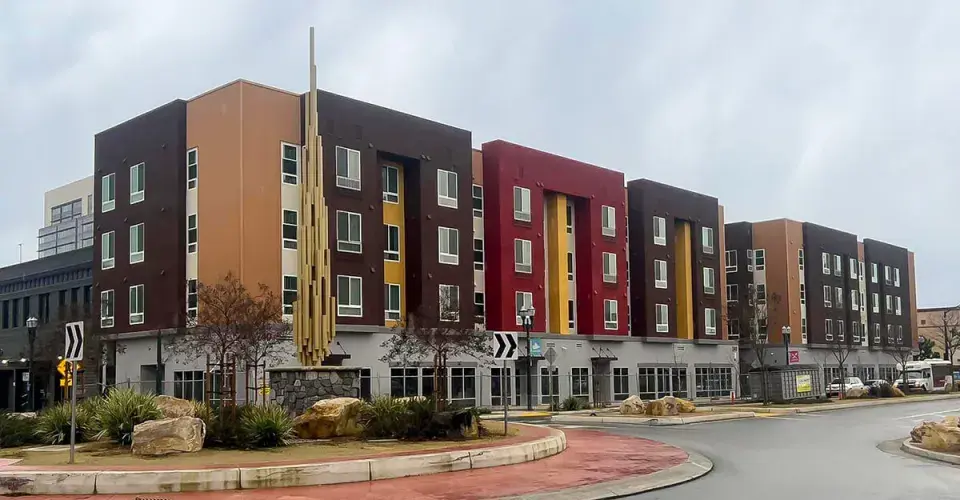
Enterprise's Commitment to the Central Valley
Affordable housing challenges don't respect city boundaries, as we saw in Bay Area housing pressures rippling outward. That's why our Northern California team has been committed to regional solutions since 2016, when we first established a dedicated Central Valley presence.
Our commitment has evolved significantly over the years from providing in-depth technical assistance to help communities secure state funding, to working with cities during the pandemic to enact policies preventing displacement during significant migration from higher-cost areas.
In 2021, we deepened this commitment by co-leading the Stockton Housing Justice Coalition and helping launch the Stockton Housing Innovation Fund, a participatory grantmaking initiative in partnership with the San Joaquin Community Foundation. The Housing Ecosystem Initiative represents our continued investment in creating lasting solutions for San Joaquin County and the broader Central Valley.
A Place of Connection for Everyone
While the region's affordability advantage is eroding, it's not too late to preserve what makes this community accessible to families at all income levels. Success will require public agencies, developers, financial institutions, healthcare partners, community organizations, and philanthropy to work together toward shared goals.
Together, we can work to solve the local housing challenges and ensure that San Joaquin County's legacy as a vibrant, affordable, and inclusive place of connection endures for generations to come.
To learn more about the Housing Ecosystem Initiative, contact our Central Valley team, Associate Director Kristine Williams or Program Manager Brenda Ward.