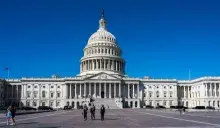
Earlier this year, the Biden-Harris administration announced a set of actions intended to address racial bias in the home appraisal process. The announcement followed a two-year effort led by the Interagency Task Force on Property Appraisal and Valuation Equity (PAVE), an inaugural task force comprised of 13 federal agencies and offices directed to evaluate the causes, extent, and consequences of appraisal bias, as well as establish recommendations to eliminate racial and ethnic bias from the home valuation process. The task force found that the legacies of past racist housing policies, along with industry practices that reinforce negative perceptions of neighborhoods with high concentrations of Black, Indigenous, and other people of color contributed to the under-valuation of homes in majority-BIPOC neighborhoods and the loss of billions of dollars in wealth for their owners.
The California Legislature has passed and Gov. Gavin Newsom has signed critical affordable housing legislation from streamlining development to unlocking local resources to strengthening tenant protections.
Native American Heritage Month provides an opportune moment to take stock of and review Enterprise’s legislative and policy agenda for Native and Tribal housing. Enterprise’s policy and Tribal Nations and rural teams are working together to advance Tribal sovereignty, combat disinvestment and redlining on Tribal land, and increase housing opportunities and stability for Native communities around the country.
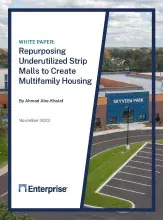
Could mall-to-housing conversion be a part of addressing the country’s affordable housing shortage? In a new white paper, Enterprise senior research analyst Ahmad Abu-Khalaf examines the promise and challenges of converting malls into affordable housing. We spoke with two developers featured in the white paper.
Vacant retail space transformed into affordable homes? Yes! This Fast Company article examines the potential outlined in our latest report, Repurposing Underutilized Strip Malls.
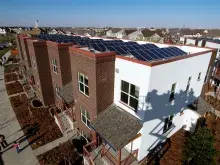
While the world watches and calls for swift and immediate action to address climate change, environmental justice proponents warn that not all policies are created equal, and that some may serve to exacerbate existing inequities, including by race and ethnicity. While many homeowners can invest in efficiency upgrades, electric technologies, and renewable energy generation, renters—particularly low-income and BIPOC renters—rarely have the same options. A careful approach to decarbonization must be considered to avoid exacerbating the nation’s affordable housing crisis.
Congress must act so that communities hit by disaster can receive funding more quickly and equitably, Enterprise’s CEO and President Shaun Donovan testified before Congress. Donovan also stressed that communities need funding to be better prepared for disasters, noting that mitigation measures can more than pay for themselves and can save an average of $6 in future disaster recovery costs for every dollar spent.
Enterprise President of Solutions Jacqueline Waggoner writes an op-ed in SF Chronicle about the skyrocketing cost of insurance and the threat it poses to housing affordability.
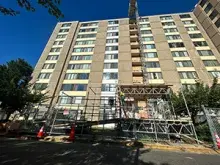
The number of Americans experiencing homelessness on a given night rose by 12 percent in 2023 surpassing 650,000 people for the first time since reporting on this metric began in 2007. Said another way, one out of every 500 men, women, and children in the US were found either in a temporary shelter or unsheltered in places not meant for habitation, such as in parks, cars, abandoned buildings, or transit stations.