Image
2026 Green Communities Criteria: 20 Years Strong
Every five years, Enterprise Green Communities undergoes a refresh to capture the latest technology, best practices, and learnings from the field. The newly launched 2026 Criteria is our 20th anniversary edition. It emerged over 18 months with extensive expert guidance and stakeholder feedback.
The updated standard centers three themes – energy, resilience, and health – and features several refinements, including:
Discover what’s new on the 2026 Green Communities Criteria web platform or download the manual on our Learning Center.
There’s much more ahead, so register now for these upcoming events and stay tuned for approaching milestones:
For over 20 years, our Green Communities have created healthy, sustainable and affordable homes for over 1 million people.
EMISSIONS PREVENTED
26000
of CO2 emissions prevented by our Green Communities-certified homes.
LIVING GREEN
2600
affordable housing developments nationwide have met Green Communities certification to date.
SAVINGS
332
dollars saved in water and energy costs by our Green Communities-certified homes.
In addition to our industry-leading standards, we provide grants and technical assistance to advance high-quality affordable housing development. We also partner with researchers to improve the health and quality of indoor environments, and engage with federal, state, and local leaders on polices that further green affordable housing development.
All of our capital tools, technical assistance, programs, and policy solutions are designed to make affordable housing in communities across America healthier and more prepared to withstand severe weather events.
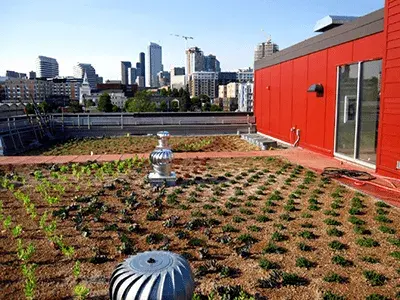
Our cost-effective, above-code green building program includes integrative design, site considerations, water, energy, healthy building, operations/maintenance, and resident engagement. It is applicable for new construction, substantial and moderate rehabilitation, historic properties, and adaptive reuse across both multifamily and single-family affordable housing projects.
In partnership with the International Well Building Institute and their WELL Building Standard, we’ve leveraged the best of these impactful programs, and created a path for affordable housing developments in the United States to create best-in-class healthy, efficient, and environmentally responsible homes.
Projects that achieve certification with the 2020 Criteria are recognized as certified under both Enterprise Green Communities and the WELL Building Standard. Those achieving certification to the 2026 Criteria will also obtain certification to WELL Residential.
Learn more about our criteria and eligibility requirements.
The 2026 Criteria feature a new optional criterion called Energy Planning. This new standard encourages project teams to develop and implement a plan to reach zero emissions within 20 years of certifying to the 2026 Criteria. Ideally suited to rehabs of existing buildings, our process outlines how project teams can align their capital planning decisions to reduce property emissions. In addition, our new – and highest – tiers of Green Communities certification are available to projects that are designed to be highly efficient, all-electric, and only use clean energy sources, ultimately improving health of their residents, reducing utility bills, and moving to clean power sources.
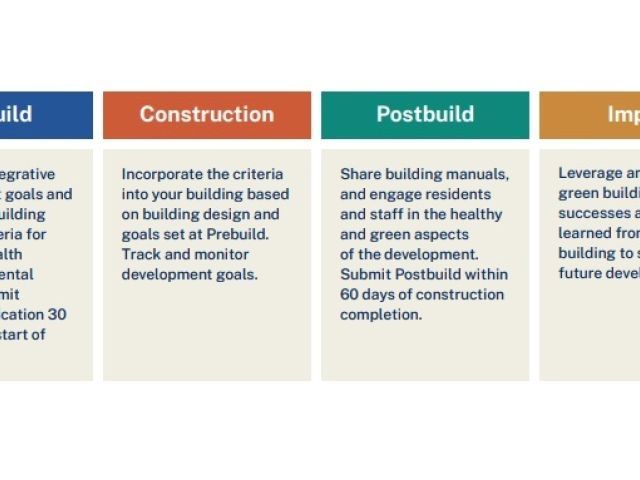
We are passionate about turning our best practices into standard practices and are here to support you on this journey. To make things easy, we’ve created a certification portal with everything you need to complete your application.
In addition to a comprehensive overview of our application process, the portal has customizable templates, tools, and calculators for your green building certification submittal. We also host regular office hours to answer your certification questions.
Green Communities Certification is available for all buildings that contain affordable housing units. Enterprise defines affordable housing as projects serving ...
In addition to our industry-leading standards, we partner with researchers and government organizations to advance the field of green affordable housing development.
Our practice-informed guidance leverages more than four decades of experience in both successful advocacy at all levels of government and program execution to create actionable policies. At the national level, we work with affordable housing institutions, including HUD, Freddie Mac, and Fannie Mae, to associate more favorable financial incentives for housing that achieves green building standards.
Our team continuously strives to deepen our understanding of how green building, policies, and practices can help expand opportunity in communities nationwide. Throughout our history, we have partnered with a variety of leading institutions on research projects designed to advance the field. For example, we collaborated with the National Center for Healthy Housing on “Studying Optimal Ventilation for Environmental Indoor Air Quality.”
Twenty-nine states currently include Green Communities Criteria as part of their Qualified Action Plans for the distribution of Low-Income Housing Tax Credits — and many more include some level of green and/or energy incentive(s). We provide guidance on best practices to housing finance agencies and other organizations to continue moving the needle on green building, and work nationwide with coalition partners to advance green building across the country. Learn more about certification offerings in your state’s QAP.
Contact us to learn more about how we can help you advance green building for affordable housing in your area.
From a high-rise modernization for seniors in Chattanooga to new, accessible homes in Philly, see how others are leveraging our criteria across the country.