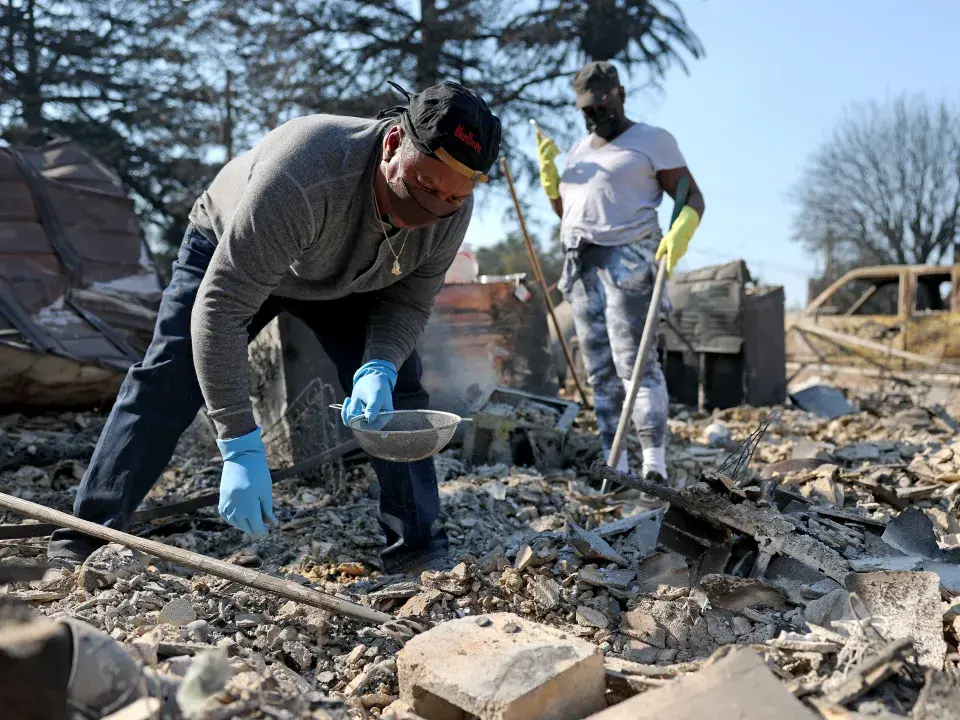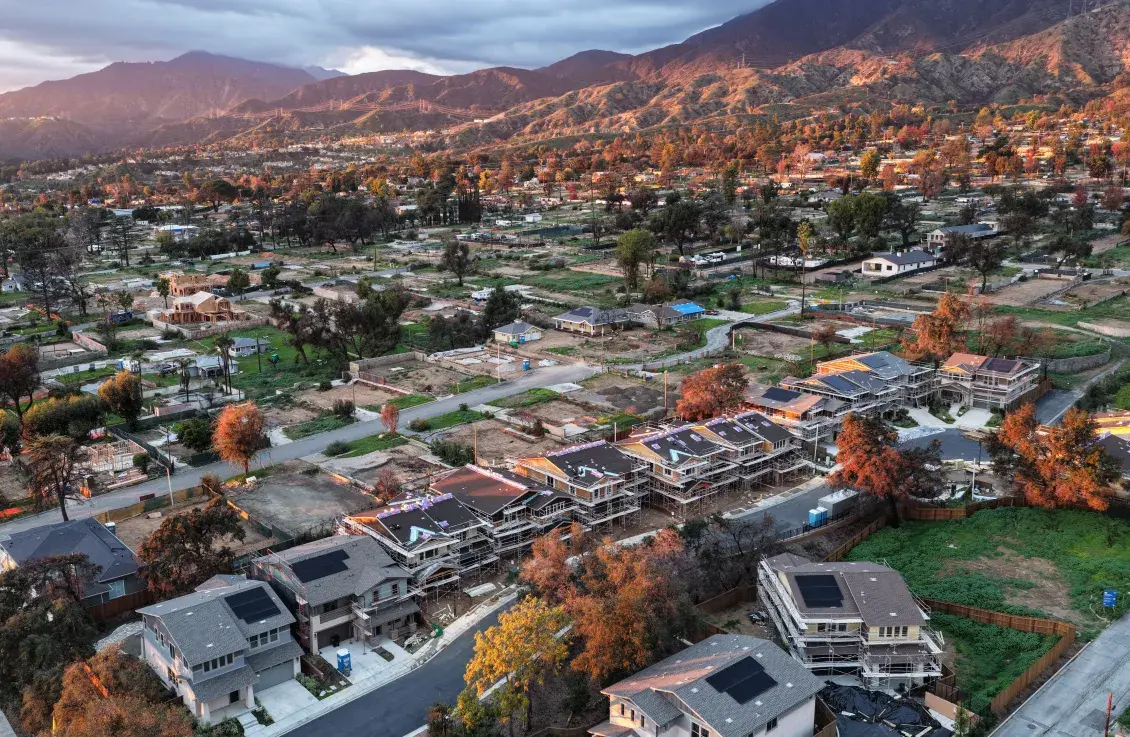
In January 2025, the Eaton Fire swept through the Altadena community, leaving billions of dollars in damage and becoming the second most destructive wildfire in California history. Along with the nearby Palisades Fire, the blazes destroyed 9,400 structures and displaced more than 100,000 people in Los Angeles County.
For a community already struggling with affordability, rebuilding equitably is challenging as many formerly affordable homes may rent at market rate without intervention. Altadena has long been a cradle for Black homeowners, and the fire severely damaged nearly half of Black-owned homes in the community. Beacon Housing, an Altadena non-profit organization focused on real estate, has served as an important player to bring community members back home, regardless of income level.
This year, Beacon Housing was one of several grantees receiving HUD Section 4 funding from Enterprise Community Partners in Southern California to advance wildfire recovery work. With support from the grant, Beacon Housing is transitioning from short-term emergency response to long-term rebuilding by conducting site assessments in the fire impact area, providing predevelopment oversight, and formalizing its operations.
“We knew that Altadena already had an affordability crisis, and losing thousands of homes would only exacerbate it,” said Palin Ngaotheppitak, Beacon Housing’s executive director. “We were thinking about the low-income renters, informal renters, and multigenerational households who were paying significantly below market. How could we build back in a way that keeps units affordable?”
Ngaotheppitak spoke with us about Beacon Housing’s vision for a more equitable, resilient Altadena.
How did Beacon Housing start and how has its approach evolved over time?
Beacon was founded 30 years ago by two brothers — both real estate developers — who were challenged by their faith community to give back. They wanted to create a continuum from homelessness to home ownership. As the market, property acquisition, and funding availability have changed, along with the urgency to rebuild following wildfires, we have focused on being more strategic around deploying resources and collaboration.
One example of our partnership model is how we operate our transitional housing property, Casa de Alegria. We partner with Door of Hope, which runs the programming and fundraises while we provide and manage the property like a landlord, but without charging rent. We also master-lease to organizations whose clients can't qualify on their own. These organizations often lack the experience to secure a master lease themselves — but we see that need, so we plug in and are flexible with solutions.
What have Beacon Housing’s Eaton Fire recovery efforts looked like?
We are a hyperlocal organization, with our rental properties located in Pasadena and the surrounding areas, so the fire happened right in our backyard. We pivoted fast, expanding our Helping Hand grant from Covid as an emergency cash grant for fire survivors. We leveraged a $10,000 seed grant from our funders into $150,000 in donations, which we gave away to low-income households.
From a longer-term perspective, Altadena already had an affordability crisis, and losing 7,000 homes would only exacerbate it — especially for low-income renters, informal renters, and multigenerational households who were paying significantly below market, with many rental units likely being naturally occurring affordable housing.
Our focus in the fire recovery efforts has been to help people who were stably housed and paying significantly below market rent before the fire find a way to stay in the community. For many, especially low-income and long-term renters, there simply were no comparable units that they could access in the market. We have been working to change that.
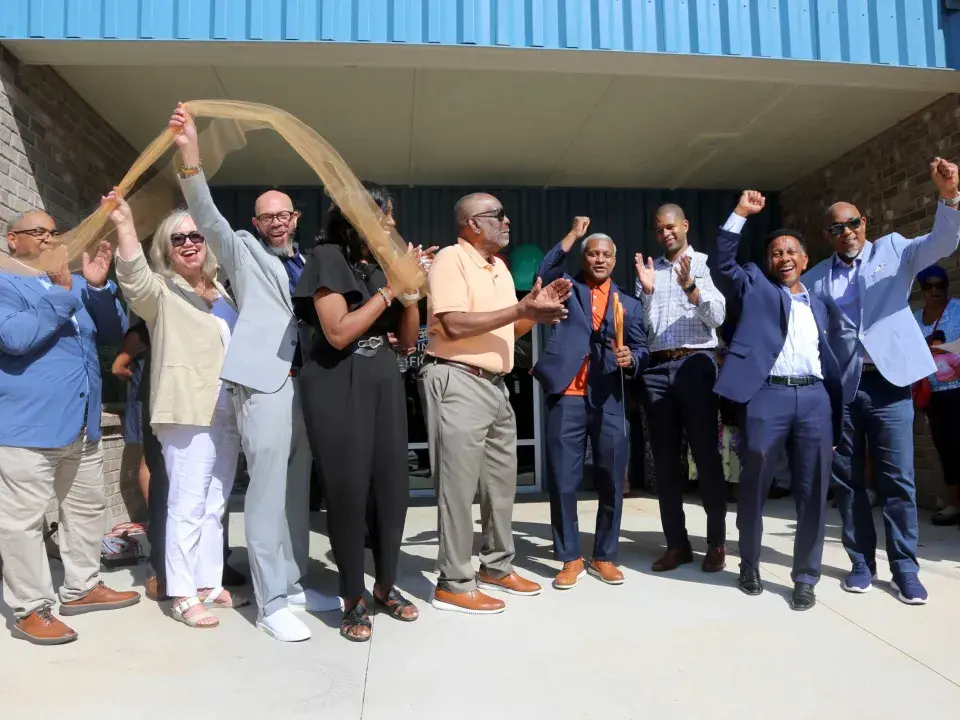
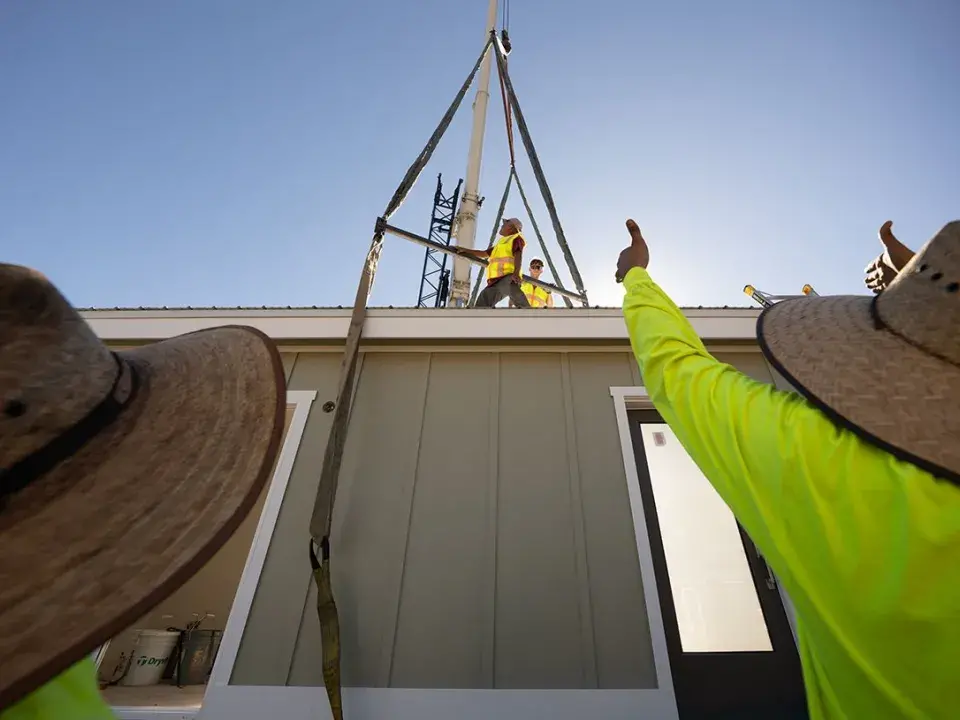
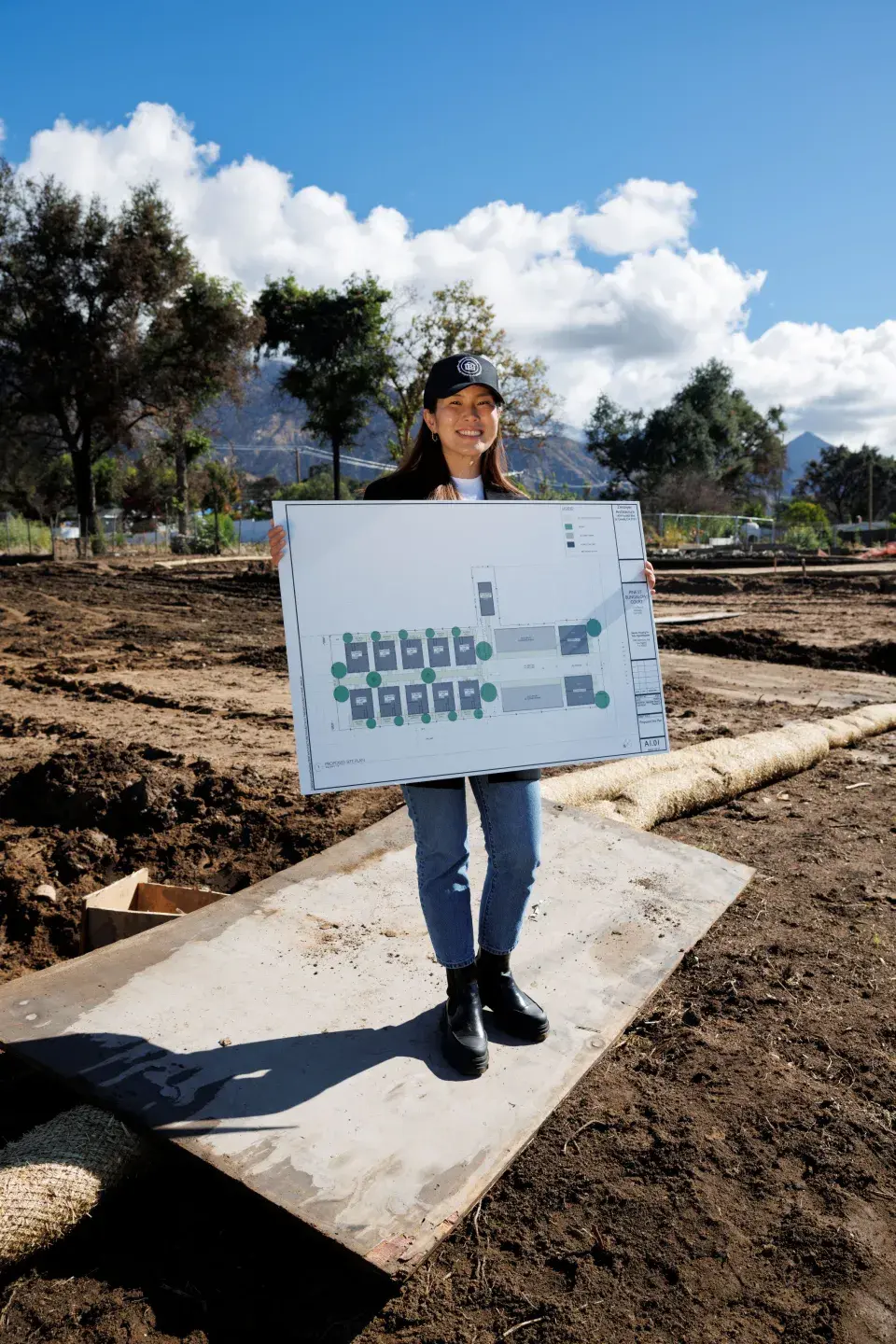
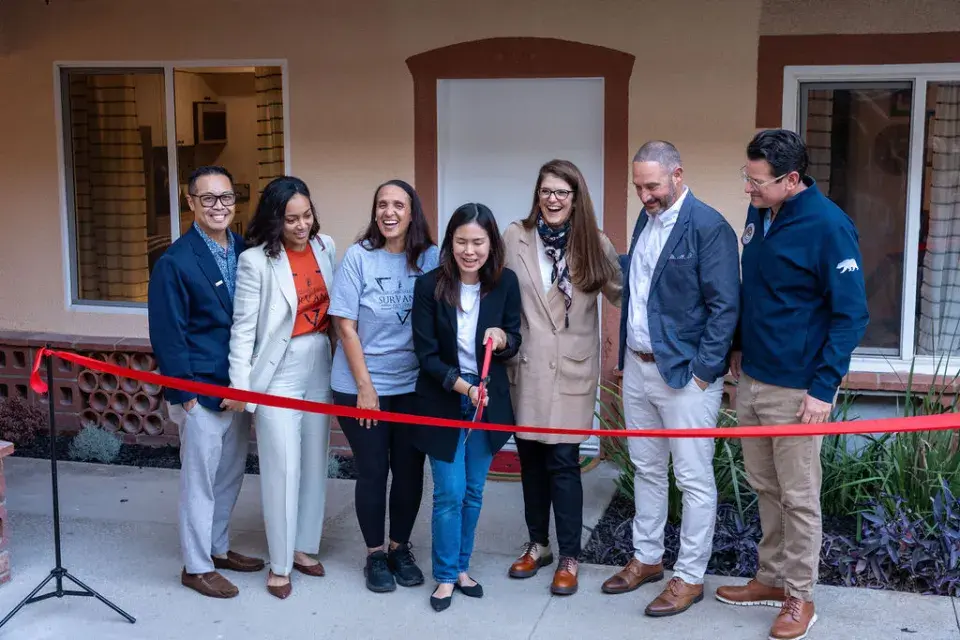
It's been a collaborative effort. Altadena Builds Back Foundation (ABBF), a supporting organization of the Pasadena Community Foundation (PCF), in partnership with Molly Munger and Steve English, granted us $5.8 million. This allowed us to purchase and rebuild a destroyed 14-unit bungalow court and restrict the property for the next 55 years as affordable housing so the change lasts generationally.
Another long-time partner, YMCA of the Foothills, helped us pilot layering in rental assistance of up to $500 per month for at least two years onto 3 new units we built for fire survivors. Rental assistance works especially for our units because our rent is already below market ,and we place less emphasis on barriers like credit score or rental history. With the layered in subsidy, our studios now rent for $700 a month and one-bedrooms for $850 for the next two years.
Another way we have been working in partnership with other organizations is through the Eaton Fire Collaborative. For example, to build the case for more funding and create interventions making affordability happen, we worked with Eaton Fire Collaborative’s Housing Committee on a survey to better understand the housing needs of both homeowners and renters, comparing pre- and post-fire rents.
What common barriers do residents face right now, 18 months after the fire?
The barriers aren’t the same for everyone. That’s one of the hardest parts: we have a diverse community, so we need multifaceted solutions, not one fix.
Among our low-income renters, we’re seeing two main groups. The first are households who may be a bit below our income eligibility, but likely only temporarily. We try not to enforce that line too rigidly, instead looking at layering in support, like our light rental subsidies spread over a longer period. We believe many of these households can reach long-term housing stability if they’re given enough time.
The second group includes seniors and others living on fixed incomes. Last year, we got a call from Patricia, a senior displaced by the Eaton Fire. She had moved seven times and was living in an Airbnb with Salvation Army assistance, but didn’t know when that support would end. Her Social Security check was barely enough to cover our least expensive unit.
Patricia inspired us to create our rental subsidy program. Today, she lives in one of three ADUs we completed with PCF’s support, with a subsidy that brings her rent portion to an affordable level for her. We've committed to keeping the three ADUs rent at the same level with or without subsidy, but that is not sustainable with every unit. There is a real need for an ongoing subsidy, like a HUD Section 8 voucher, to remain in the community long-term.
So we need both rental assistance that bridges people back to self-sufficiency, and long-term interventions for those who will continue to need support. We also need community acquisition funds that keep housing permanently affordable. The throughline is simple: housing comes first. Nothing else stabilizes until that’s solved.
How will HUD Section 4 funding address Beacon Housing’s gaps? Why is investing in a standardized pre-developed process so valuable for organization and for long-term community recovery?
We always need more cash, but we need human resources too. My tiny but mighty team has been running nonstop for a year and a half, expanding rapidly because we were one of the few local housing provider organizations and we needed to meet the moment. We have made amazing things happen, but we also know that we need to build out our capacity in a sustainable way.
This funding supports a new point of contact for assessing new acquisitions. It's part of systematizing our work. Right now, we are just making things happen, but we recognize the need to systematize processes and procedures to ensure sustainability. Creating a handbook for Beacon Housing's assessment of acquisition is institutional knowledge that we need to pass down and help other organizations build their own.
What is Beacon Housing’s vision for community rebuilding?
Our vision is to ensure that people still struggling to regain housing stability, especially low-income renters stably housed in Altadena before the fire, have a feasible path back. For us, that means focusing on properties where we can restore pre-fire density or add modest, gentle density that fits the surrounding neighborhood. These may be small projects, one property at a time, but together they can preserve an important part of Altadena’s rental housing stock.
It also means keeping these properties off the speculative market. Once a property is rebuilt at market rate, it becomes extremely difficult to make those units affordable again. For residents earning below 50% of area median income, we also need deeply subsidized development capital like grants, very low-interest permanent loans, and other patient, long-term financing that allows community-based organizations to acquire, renovate, and build housing without carrying costs that require market-rate rents. We can keep rents at our bungalow court truly affordable because the project was 100% grant funded.
How do you see this investment serving Altadena and as a model for other communities recovering from disasters?
I hope in five to 10 years, we as a community will have created a model for housing recovery that is more equitable and inclusive. Seeing community land trusts and organizations, like Greenline Housing Foundation, participate at the forefront of building back is so important because it shows what collaborative recovery looks like. The relationships we’re building will outlive us. We have in Altadena different organizations working in concert to address all the different groups that may be left behind. I also hope that after future disasters, low-income renters can be at the table from the very beginning.
What does this work mean for you personally?
The work has been very healing. I’m an Altadena resident, still displaced, fighting insurance like a second job. The last year has been hard for my family.
Seeing all the ways other organizations have worked to help has been really lifegiving. I've been doing nonprofit work for a long time, and I have been heartened by how funders have engaged with the community here. I cannot say enough about organizations like PCF, ABBF, and Enterprise, that are here on the ground talking to people every day. That has changed the way that I will look at philanthropic relationships forever.