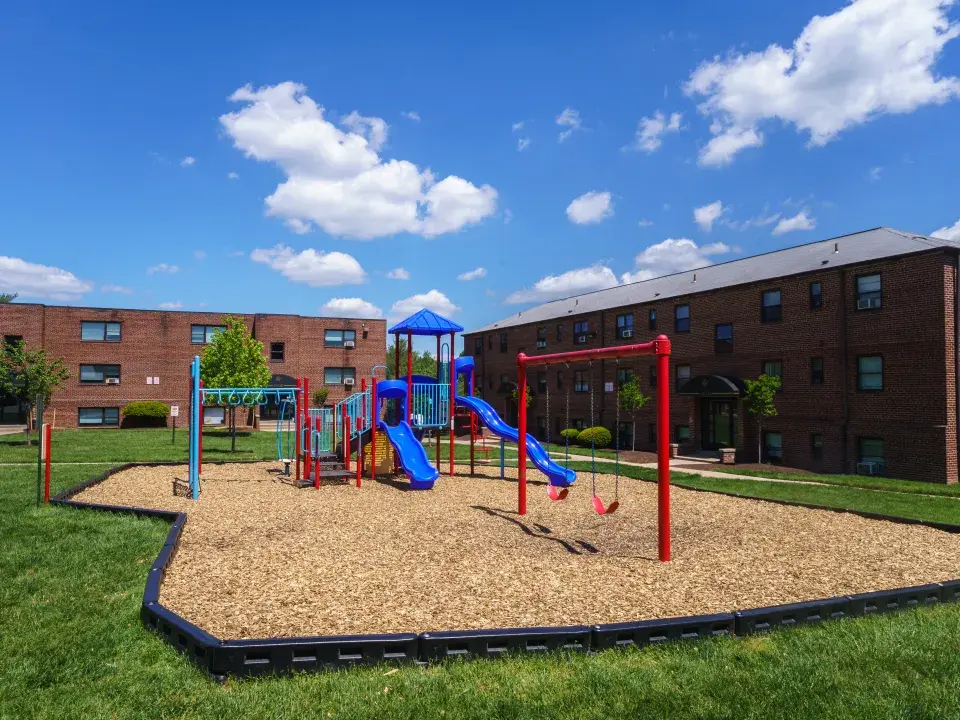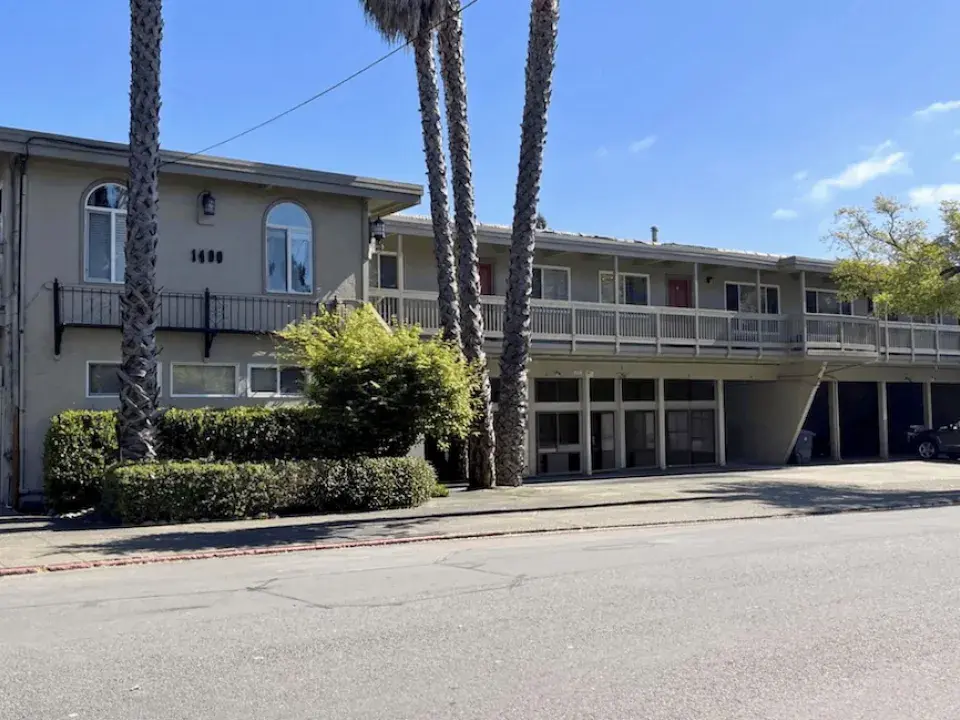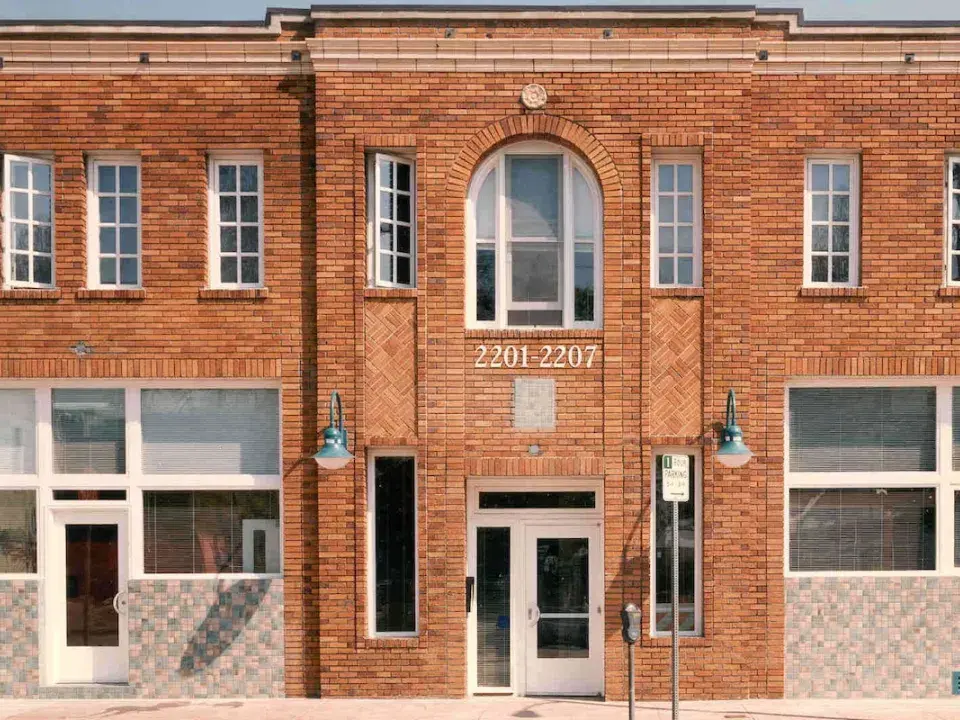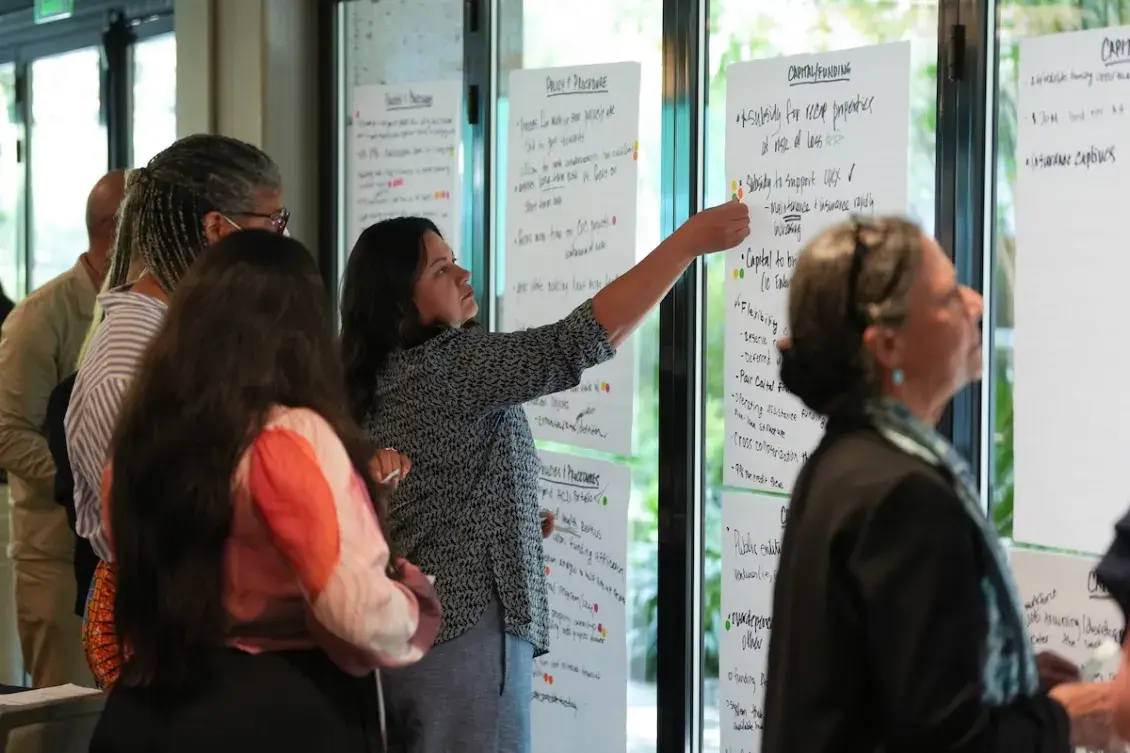
California lost more than 17,000 affordable homes from 2001 to 2025, and another 46,555 are at risk in the next 10 years.
“We're losing affordable units faster than we can build,” said Adey Tesfaye, senior vice president and head of Community Reinvestment Act department for City National Bank.
Tesfaye spoke at the recent Preservation and Partner Sustainability Symposium, where Enterprise brought together more than 100 affordable housing leaders, researchers, and practitioners in downtown Los Angeles to discuss preservation projects, challenges for affordable housing developers and owners, and policy solutions. The event was sponsored by City National Bank.
“Our primary goal is to not only produce and protect affordable housing, but also to create systems that work, learn from our peers, support innovation, and of course, ensure that Enterprise is leaning in to support partners by providing grants, technical assistance, capital interventions, and addressing policy concerns that threaten our sector,” said Jimar Wilson, Enterprise vice president and Southern California market leader.
During the opening plenary, California Housing Partnership Associate Research Director Danielle Mazzella went further into the urgency of this work, noting that at-risk affordable units are concentrated in Southern California, the Bay Area, and Sacramento. With mounting insurance premiums and rising costs of living, affordable housing is both difficult to maintain and more important than ever to preserve.
Key Priorities to Advance Preservation of Affordable Homes
The day’s program touched on a wide variety of topics, including financial viability and partner sustainability. Four key priority areas emerged as participants grappled with accelerating loss of affordable units and how to build a more resilient housing ecosystem.
Policies and procedures
Expanding vouchers emerged as the top policy priority. During the first panel on public sector preservation, Craig Arceneaux, assistant general manager for the Los Angeles Housing Department’s Housing Development Bureau, stated that he wanted policy leaders to focus on more vouchers.
“Bring back vouchers and more vouchers. We know PSH [permanent supportive housing] deals don't work without vouchers,” said Arceneaux.
Attendees also highlighted another priority: expanding the Portfolio Reinvestment Program, the California Department of Housing and Community Development’s (HCD) first dedicated preservation program. In the same panel, HCD Asset Management and Compliance Chief Lindy Suggs introduced the program as aiming to “decrease the risk of conversion to market rate housing and extend the remaining useful life and long-term affordability of existing HCD-funded affordable housing projects.”
While we’re talking about these units and numbers, ultimately there are people and our children — our present and our future.
Lila Gitesatani, Staff Attorney, National Housing Law Project
Capital and funding
Many attendees and presenters called for additional funding to cover operating expenses for affordable properties. Michael Claproth, Enterprise Southern California associate director of sustainable connected communities, stressed that expenses have outpaced revenue of housing since 2021. Rising costs, including substantial increases in insurance premiums, necessitated affordable housing operators to make difficult decisions regarding expenditures.
Partner organizations directed the audience’s attention toward the need to develop alternative revenue sources to address overdependence on developer fees. These fees push developers to continue building to generate fees even when the underlying properties don’t generate enough revenue to maintain operations.
Capacity building
The audience identified the shortage of property managers as a pressing priority, while a panel on organizational stability discussed the need for training and development of people entering the sector, along with building a pipeline of property management firms capable of handling Low-Income Housing Tax Credit and PSH developments. Only a handful of firms can handle PSH, with even more owners refusing to take it on.
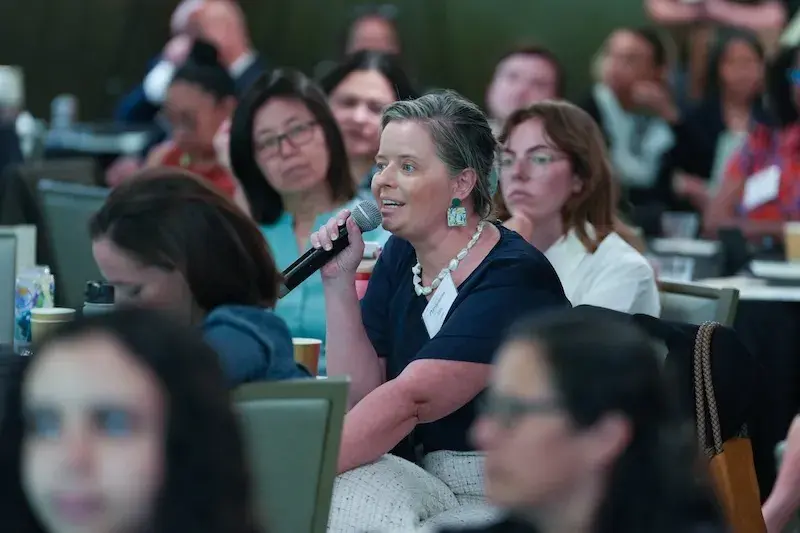
While the work of property managers becomes more difficult, compensation has not increased proportionately. Due to thin operating margins, staff recruitment and retention is an ongoing issue. This challenge will only exacerbate with time as competition from minimum wage increases rises and maintenance costs reduce funding for staff.
Matt Morin, Enterprise senior director, pointed to Enterprise’s Asset Management University 2.0 as a model that has gained traction in New York City. This program provides training and technical assistance to developers to help them better serve residents in a resource-constrained environment.
Research
The top priority for research was to better understand how much time aging portfolios have before organizations exhaust available capital and begin to fail. This issue arose when an audience member commented on the need for more research related to publicly funded portfolios to inform the urgency of the housing crises.
Spotlight on Successes
Two spotlight sessions put the event’s priorities into context, with a key focus on the burden of operating costs.
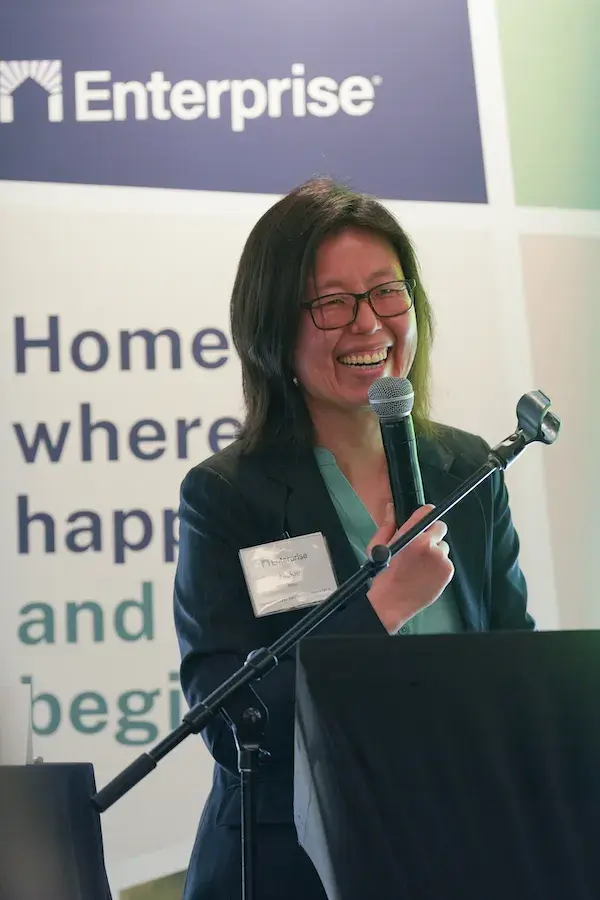
Jackie Tsou, director of multifamily asset management and preservation in the San Francisco Mayor’s Office of Housing and Community Development, presented on the city’s post-Covid portfolio stabilization initiative. Designed to address rising operating costs, rent non-payment, and high vacancies, the initiative allowed cross collateralization through temporary waivers to secure multiple loans with the same asset.
This allowed money that would normally flow back into the city to be reinvested in preservation projects, reallocating approximately $9.9 million in funds, with $8 million going back into projects in the first two years. While Tsou thought a similar initiative could potentially be implemented in other cities for low resource and budget constrained environments, she also noted that this is a short-term strategy in San Francisco and that it wouldn’t work for every situation, such as portfolios that are mainly PSH.
Sara Tsay, senior vice president of portfolio strategy at Abode Communities, spoke about the preservation of the New Clark Residence, stabilizing the building’s operations for at least the next 20 years. The preservation converted 150 single-room occupancy units into 106 studios, enough to house all current residents. Major infrastructure and building repairs improved accessibility while adding new residential services. The transformation was made while minimizing displacement with a phased construction approach.
Policy Approaches to Stabilize Affordable Housing
The symposium closed with discussions on preservation successes and calls to action. Speakers advocated for several legislative proposals, including SB 1091 — the Community Anti-Displacement and Preservation Program that attaches long-term affordability restrictions and prevents displacement — and local implementation of policies like AB 670, which allows jurisdictions to claim Regional Housing Needs Assessment credit for homes preserved. Discussions echoed earlier points, such as the significant operational and asset management barriers that housing providers experience and the need for more technical assistance on a state level.
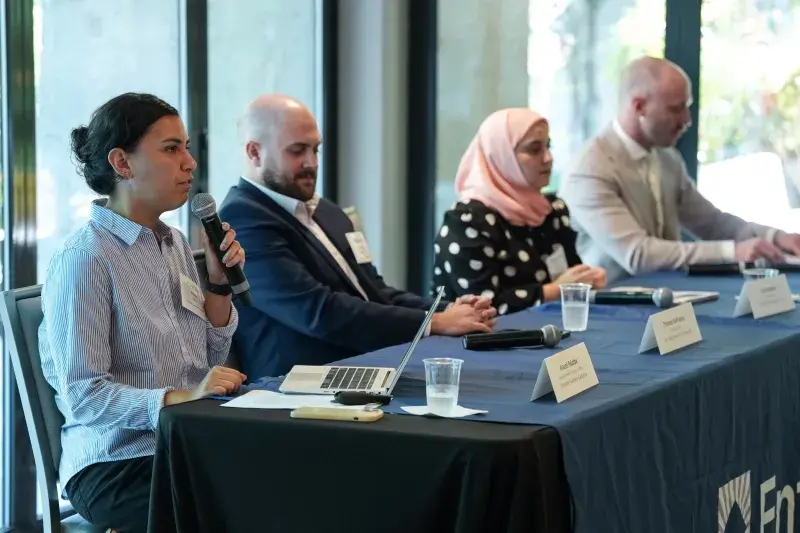
More optimistically, Thomas DeFranco, San Diego Housing Commission director of policy, emphasized the City of San Diego’s preservation ordinance passed unanimously while funding was dedicated to preservation through development impact fees.
Jackson Loop, Southern California Association of Nonprofit Housing policy director, pointed to Measure ULA as an innovative funding source for preservation and housing stabilization efforts, but added that a robust public sector and capacity building in the development sector is essential for its implementation. Moreover, the National Housing Law Project, represented by Staff Attorney Lila Gitesatani, co-convenes a statewide preservation compact bringing together policy advocacy groups, nonprofit organizations, and community leaders to discuss statewide and local issues regarding at-risk housing across the state.
The panelists closed by urging attendees to help construct not only more resilient homes, but a more resilient preservation narrative. Preservation remains a difficult topic to communicate to the public and policymakers, so Gitesatani argues that this makes the human story paramount.
“While we’re talking about these units and numbers, ultimately there are people and our children — our present and our future,” stated Gitesatani.