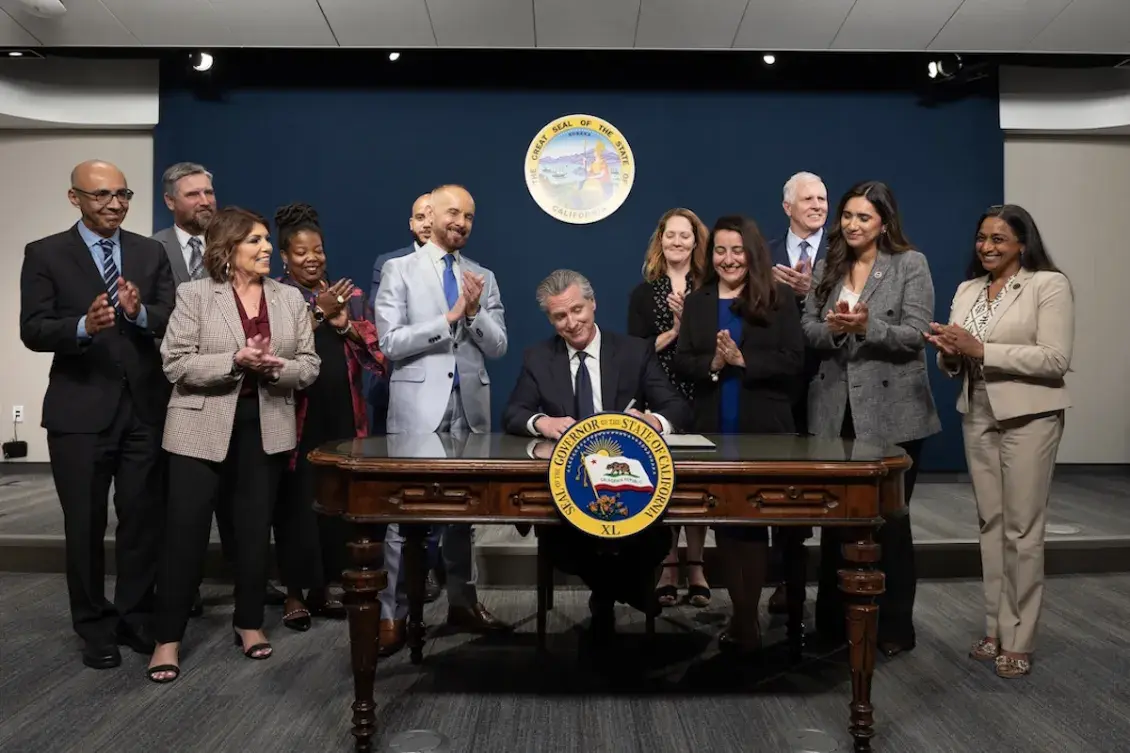
Gov. Gavin Newsom signed California’s state budget on June 30, marking the end of a months-long negotiation that included numerous key housing and homelessness priorities, such as the state affordable housing bond, critical budget investments, and policies to support the successful implementation of the new California Housing and Homelessness Agency.
A Historic Housing Bond Years in the Making
Last week, the Legislature and Governor came to an agreement to place a $11.25 billion affordable housing bond on the November ballot, marking a major milestone in an enormous multi-year effort to bring a state bond over the finish line. California voters will have the opportunity to make their voices heard in November, where the bond must pass by a simple majority.
The bond will bring significant investments to support low-income communities across the state and provide housing affordability and stability to thousands of families. This is the largest infusion of state dollars into the state housing system that we've ever seen here in California.
Enterprise extends our wholehearted gratitude to Gov. Newsom, Senate President pro Tempore Monique Limón and Assembly Speaker Robert Rivas for prioritizing housing on the ballot this year through a bond that truly responds to the scale and breadth of the need. We also extend a special appreciation for our steadfast legislation champions for this bond, Assemblymember Buffy Wicks, who has marshaled this bond forward from the earliest days, and Senator Christopher Cabaldon, who, upon joining the State Senate, became a critical force in making this bond a priority in Sacramento. Their collective leadership responds to the deep needs of our state, particularly for low-income Californians impacted most by our housing crisis.
The Veterans and Affordable Housing Bond Act of 2026, which will be known as Prop 1, includes a $1.25 billion revenue bond for the Veterans’ Farm and Home Building Fund of 1943 and a $10 billion general obligation bond for the following affordable housing production and preservation programs:
- $5.1 billion for the Multifamily Housing Program
- $1.15 billion for permanent supportive housing
- Up to 15% may be used for Homekey+
- $150 million for youth housing
- $750 million for the Portfolio Reinvestment Program
- $200 million for the Community Anti-Displacement and Preservation Program (CAPP)
- $600 million for CalHome
- $500 million for Dream for All
- $450 million for the Joe Serna, Jr. Farmworker Housing Grant Program
- $200 million for the Tribal Housing Grant Program
- $500 million for the Infill Infrastructure Grant Program
- $350 million for affordable student housing, split evenly among the University of California and the California State University
- $200 million for the Local Housing Trust Fund Matching Grant Program
Enterprise has been serving as one of the co-leads for this effort, with our affordable housing pipeline research providing data on the 40,000 affordable homes waiting for funding across California and the resources needed for them to break ground. The analysis that we produced has been influential in communicating the potential impact of state investments in affordable housing and quantifying the need for state leaders at the negotiating table.
Enterprise has also been co-leading the creation of the Community Anti-Displacement and Preservation Program (CAPP) for the past five years through the Stable Homes Coalition. We are co-sponsoring a companion bill to the bond, Senate Bill 1091 by Senator Caballero, to establish the program. CAPP would provide funding for the acquisition and rehabilitation of unsubsidized affordable housing and preserve them as permanently affordable, preventing displacement and allowing residents to remain in their communities.
As the only new program receiving an allocation in the bond, it is a major win for CAPP to be included and serves as a testament to the growing recognition of preservation as an integral affordable housing strategy at the state level – as well as the power of persistence in our work to educate and advocate to scale proven local programs to the state level.
State Budget Investments Provide a Bridge to the Bond
Despite the near-term financial picture improving here in California, this year's budget negotiations were still very challenging, primarily due to the severe federal cuts to healthcare and other social safety net programs. Housing and homeless programs will be receiving $1.6 billion in one-time dollars for the next fiscal year. These investments prioritized programs that cannot be funded through a bond. This funding is allocated across the following three programs:
- $900 million for the Homeless Housing Assistance and Prevention Program
- $500 million for the state Low-Income Housing Tax Credit
- $200 million for the Multifamily Housing Program
Our statewide budget coalition of affordable housing and homelessness advocates, developers, and housing justice organizations has been advocating for $3.3 billion in funding for key affordable housing and homelessness programs. The housing investments in this year’s budget are only roughly half of our original request, but we recognize the budget constraints faced by the state, which have only been worsened by federal funding cuts.
While we are disappointed that CalHome, the Joe Serna Jr., Farmworker Housing Grant Program, and the Portfolio Reinvestment Program did not receive funding in the state budget, the housing investments in the budget still provide an important bridge to ensure that the state’s pipeline of affordable homes does not stall, at least until a bond can provide essential funding in the years to come.
State Housing Agency Restructuring
Our team is grateful to have been a partner in shaping the new California Housing and Homelessness Agency (CHHA), which officially goes into effect on July 1. As part of the budget agreement, several supportive policies were passed to support the implementation of CHHA.
For example, through the budget trailer bills, the new Housing Development and Finance Committee (HDFC) will receive its own allocation of tax-exempt bonds to pair with subsidy programs, allowing the committee to make the “one-stop” integrated award that includes multiple funding sources. This is a key step in reducing time and cost for developers applying for state resources.
Enterprise will continue to monitor and engage with CHHA as implementation rolls out in the second half of this year.
California Assembly Constitutional Amendment 22
Final June negotiations also included several state ballot measures, of which there will be numerous this November. Of particular relevance to our work is California Assembly Constitutional Amendment (ACA) 22, which was placed on the ballot as a compromise to the more extreme version proposed by the Howard Jarvis Taxpayers Association.
If passed, it would prohibit local special tax measures from passing through a citizen's initiative with a simple majority voter threshold and would instead require that they receive a two-thirds super-majority. This will make it significantly more difficult to pass local taxes that fund our local services and infrastructure.
Many local jurisdictions have used special taxes to fund local services and infrastructure, such as affordable housing, public transit, public parks, and fire services. This includes the City of Los Angeles’s Measure ULA, which passed in 2022 and funds critical affordable housing and homeless prevention programs for the City. While ACA 22 does not directly impact Measure ULA or measures that have already passed, future city, county, or regional housing measures would face a more challenging electoral path.
Greenhouse Gas Reduction Fund Negotiations to Continue
Last month, the California Air Resources Board passed regulatory amendments for the Cap-and-Invest program that would significantly reduce Greenhouse Gas Reduction Fund (GGRF) revenues and leave critical programs with significant gaps in funding. GGRF was notably absent from the budget deal, and negotiations will likely go through the end of the legislative session in August.
Given that the state budget did not include any funding for critical “Tier 3” GGRF programs, including the Affordable Housing and Sustainable Communities program, Enterprise is committed to engaging in these conversations later this summer alongside our housing, transportation, and environmental justice partners.
Looking Ahead
Enterprise will continue to advance our legislative priorities, including SB 1091 and the GGRF expenditure plan, through the final months of the legislative session. And, as we get closer to the November election, Enterprise looks forward to working with our partners to support the passage of the affordable housing bond and raise the resources that our communities deserve.