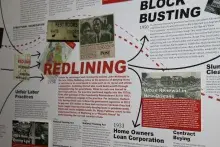
This timeline describes how centuries of racist and exploitive housing and land policies fostered many of the socio-economic inequities currently borne by Black, Indigenous, and other people of color (BIPOC).
An era of growth and movement within the U.S. prompted new policies to address the changing faces and places of many citizens. By the start of the Great Depression, residential segregation had become the norm across much of the United States.
From the first colonial settlements through the Revolutionary War, Civil War and Reconstruction, policies at all levels of government have routinely and repeatedly sought to prevent Black, Indigenous, and other People of Color (BIPOC) from acquiring land and having access to certain neighborhoods and amenities.
The Great Depression prompted the federal government to intervene in housing markets in new ways, both to provide more affordable housing options for citizens in need as well as to stimulate the economy through new construction. State-sanctioned segregation, however, ensured that opportunities for BIPOC to benefit from these new housing options were limited, while federally-backed lending programs designated most communities of color as unfavorable for public and private investment. Even in the run up to World War II, as increased demand for labor in new parts of the country kicked off a second great migration, BIPOC continued to face discrimination across housing markets.
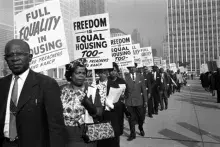
As the post-War suburban boom hits its stride, policymakers sought to revitalize the urban areas that had become home to most BIPOC families. The Civil Rights era finally prompted policy action to acknowledge these injustices but did little to undo the harm caused by centuries of discrimination.
While the passage of the 1968 Fair Housing Act banned overt racial disclination in housing, weak enforcement of the Act coupled with local control over most housing policies diminished the act’s practical effect.
Federal deregulation of mortgage and banking activities offered a new option for low-income and BIPOC communities to access housing and build wealth, but ended up disproportionately harming the same households these measures were meant to assist.
Civil rights leader Shirley Sherrod and her late husband Charles devoted their lives to advancing voting rights, solidarity, and wealth building through land ownership. But for a new generation of housing leaders like Devin Culbertson of Grounded Solutions Network, a Housing Affordability Breakthrough Challenge winner, their story is much more than a history lesson. It’s an urgent call to action.