Navigate to Homepage

Main navigation

  • About
    • What We Do
    • Our Impact
    • Where We Work
    • Leadership
  • Impact Areas
    • Preservation & Production
    • Racial Equity
    • Resilience
    • Upward Mobility
    • Partner Sustainability & Growth
    • Resident Success
  • Capabilities
    • Products for Investors
    • Financing for Developers
    • Community Development Financial Institution (CDFI)
    • Policy
    • Advisory Services & Technical Assistance
    • Program Design & Evaluation
    • Development, Property Management & Resident Services
  • Connect
    • News and Stories
    • Events
    • Grants & RFPs
    • Funders
    • Investors
    • Advocacy
    • Learn
    • Contact Us
  • DONATE
  • LEARN
  • INVEST
  • e360 LOGIN
  • Policy  (383)
  • Technical Assistance (195)
  • Low-Income Housing Tax Credit (93)
  • Community Development Financial Institution (68)
  • Preservation Equity (68)
  • Advisory Services and Technical Assistance (56)
  • Development Property Management and Resident Services (54)
  • Construction and Development  (39)
  • Advisory Services Consulting (31)
  • Financing for Developers (30)
  • Resident Services (23)
  • New Markets Tax Credit (22)
  • Program Design and Evaluation (17)
  • Products for Investors (13)
  • LowIncome Housing Tax Credit (11)
  • Property Management (10)
  • Opportunity Zones (3)
  • Environmental Social Governance Framework (2)
  • Preservation and Production (216)
  • Resilience (176)
  • Green Communities (101)
  • Preservation (92)
  • Racial Equity (92)
  • Upward Mobility  (88)
  • Building Resilient Futures (85)
  • Partner Sustainability   (77)
  • Climate Risk Reduction (70)
  • Enterprise Faith-Based Development Initiative SM (70)
  • Health and Housing (62)
  • Partner Sustainability and Growth (57)
  • Fair Housing (53)
  • Resident Success (50)
  • Equitable Path Forward (37)
  • Eviction Prevention (28)
  • Section 4 (26)
  • Equitable Decarbonization (25)
  • Preservation and Eviction Prevention (22)
  • Housing Affordability Breakthrough Challenge (21)
  • Covid Response (19)
  • Housing as a Pathway to Justice (19)
  • Enterprise FaithBased Development Initiative SM (13)
  • Design (11)
  • 2023 Challenge (10)
  • 2020 Challenge (9)
  • Healing-Centered Practice (6)
  • Cross-Sector Partnerships (5)
  • Community Ownership and Stewardship (3)
  • Renter Wealth Creation Fund (1)
  • New York (168)
  • Southern California (161)
  • Northern California (160)
  • Mid-Atlantic (133)
  • Southeast (119)
  • Tribal Nations (111)
  • Rural Communities (108)
  • Gulf Coast (105)
  • Pacific Northwest (97)
  • Rocky Mountain (96)
  • Ohio (83)
  • Detroit (82)
  • Chicago (65)
  • US Caribbean (36)
  • MidAtlantic (35)
  • Tribal Nations Rural Communities (20)
  • National (18)
Displaying 1381 - 1390 of 1604
Story
Group of six people pose for photo with flags and signage in the background

The Power of Partnership

In this latest interview with Shaun Donovan, the CEO and president of Enterprise talks about the recent win for our Power Forward Communities coalition, his conviction that homelessness is a solvable problem, and the significance of our one million homes milestone.

April 15, 2024
Resilience
Climate Risk Reduction
Green Communities
Equitable Decarbonization
Community Highlights

Statement from Enterprise Community Partners re: New York State Budget

Enterprise issues a statement about the New York State budget.
April 17, 2024
Eviction Prevention
Fair Housing
Policy 
New York
page
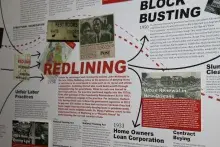
Poster with Redlining, photos, and arrows that lead to other images and text

A History of Housing Policy Through a Racial Equity Lens

This timeline describes how centuries of racist and exploitive housing and land policies fostered many of the socio-economic inequities currently borne by Black, Indigenous, and other people of color (BIPOC).
page
Woman stands in front of a house decorated with signs that uses a slur to Japanese with verbiage to keep moving and stay out

1900-1929: The Rise of Local Zoning and Housing Policies

An era of growth and movement within the U.S. prompted new policies to address the changing faces and places of many citizens. By the start of the Great Depression, residential segregation had become the norm across much of the United States.
page
Sailing ships landing in the New World

Pre-20th Century: Land and Housing Policies from Colonialism through Reconstruction

From the first colonial settlements through the Revolutionary War, Civil War and Reconstruction, policies at all levels of government have routinely and repeatedly sought to prevent Black, Indigenous, and other People of Color (BIPOC) from acquiring land and having access to certain neighborhoods and amenities.
page
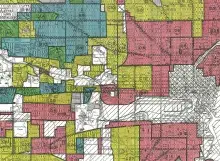
Neighborhood map shaded to indicate lots that are racially restricted

1929-1945: The Federal Government Remakes U.S. Housing Policy

The Great Depression prompted the federal government to intervene in housing markets in new ways, both to provide more affordable housing options for citizens in need as well as to stimulate the economy through new construction. State-sanctioned segregation, however, ensured that opportunities for BIPOC to benefit from these new housing options were limited, while federally-backed lending programs designated most communities of color as unfavorable for public and private investment. Even in the run up to World War II, as increased demand for labor in new parts of the country kicked off a second great migration, BIPOC continued to face discrimination across housing markets.

Pagination

  • First page « First
  • Previous page ‹‹
  • …
  • Page 135
  • Page 136
  • Page 137
  • Page 138
  • Current page 139
  • Page 140
  • Page 141
  • Page 142
  • Page 143
  • …
  • Next page ››
  • Last page Last »

Subscribe to our newsletter

  • Image
    Logo for X, formerly Twitter
  • Contact Us
  • Careers
  • Suppliers
  • Terms Of Use & Privacy Policy
  • Legal Structure

The content on this website reflects information about Enterprise Community Partners, Inc. and its subsidiaries. Enterprise Community Partners, Inc. is a national Section 501(c)(3) charitable organization. It offers financing, asset management, and housing development through its subsidiaries described in our Terms of Use.

© Enterprise Community Partners, Inc.

  • Image
    Fast Company Most Innovative Companies 2023 logo with an illustration of a lightbulb
  • Image
    Charity Navigator Four-Star badge
  • Image
    Candid Gold Transparency 2025
  • Image
    1M homes since 1982
Back to Top