
Navigate to Homepage

Main navigation

  • About
    • What We Do
    • Our Impact
    • Where We Work
    • Leadership
  • Impact Areas
    • Preservation & Production
    • Racial Equity
    • Resilience
    • Upward Mobility
    • Partner Sustainability & Growth
    • Resident Success
  • Capabilities
    • Products for Investors
    • Financing for Developers
    • Community Development Financial Institution (CDFI)
    • Policy
    • Advisory Services & Technical Assistance
    • Program Design & Evaluation
    • Development, Property Management & Resident Services
  • Connect
    • News and Stories
    • Events
    • Grants & RFPs
    • Funders
    • Investors
    • Advocacy
    • Learn
    • Contact Us
  • DONATE
  • LEARN
  • INVEST
  • e360 LOGIN
  • Policy  (1)
  • Racial Equity (15)
  • Fair Housing (5)
  • Resilience (4)
  • Green Communities (3)
  • Eviction Prevention (2)
  • Covid Response (1)
  • Equitable Decarbonization (1)
  • Equitable Path Forward (1)
  • Housing as a Pathway to Justice (1)
  • Resident Success (1)
  • Upward Mobility  (1)
Displaying 1 - 2 of 2
Story
Man holding up baby

Mitigating Extreme Heat Risk in Historically Redlined Areas

Last year was the hottest year on record , and 2024 has a one-in-three chance of being even hotter. As temperatures increase and climate change worsens, extreme heat events will occur with more frequency and intensity, having an outsized impact in dense, urban areas. Urban neighborhoods face increased temperatures due to building concentrations and a lack of green space, creating a phenomenon referred to as the urban heat island effect. Neighborhoods with a high number of low-income residents of color experience more intense heat island effects. This is not by chance, but is a result of deliberate, discriminatory housing policies that have impacted people of color, pushing them into vulnerable neighborhoods prone to extreme heat exacerbated by climate change.
April 29, 2024
Climate Risk Reduction
Green Communities
Policy 
Story
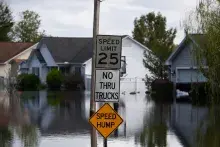
Flooded street with signs

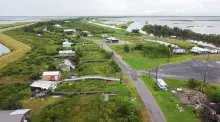
Mitigating Extreme Flood Risk in Historically Redlined Areas

As climate change intensifies, severe flood events have become more commonplace across the entire U.S. Extreme flooding disproportionately impacts low-income communities and people of color because they often live in areas that are more prone to flooding, in housing stock not well suited to weather such events, and lack adequate disaster plans as well as the financial means to evacuate and/or temporarily relocate.
February 28, 2024
Resilience
Climate Risk Reduction
Green Communities
Equitable Decarbonization
New York

Subscribe to our newsletter

  • Image
    Logo for X, formerly Twitter
  • Contact Us
  • Careers
  • Suppliers
  • Terms Of Use & Privacy Policy
  • Legal Structure

The content on this website reflects information about Enterprise Community Partners, Inc. and its subsidiaries. Enterprise Community Partners, Inc. is a national Section 501(c)(3) charitable organization. It offers financing, asset management, and housing development through its subsidiaries described in our Terms of Use.

© Enterprise Community Partners, Inc.

  • Image
    Fast Company Most Innovative Companies 2023 logo with an illustration of a lightbulb
  • Image
    Charity Navigator Four-Star badge
  • Image
    Candid Gold Transparency 2025
  • Image
    1M homes since 1982
Back to Top