

Image
Enterprise Wells Fargo Logo

Round 1: Open Application Phase (Closed)

Round 1 of the 2026 Housing Affordability Breakthrough Challenge closed May 15, 2026. Thank you to everyone who submitted an application.

Round 1 was the only open application period in the competition. Semi-finalists selected to advance into Round 2 will be notified in late summer 2026.

Three Focus Areas

Round 1 applicants were asked to name their breakthrough innovation and select its primary focus area. The three focus areas are Design and Construction, Finance, and Service Delivery and Programs.

Image
A man in an orange hard hat and vest speaking to a woman on a job site

Design and Construction

Introducing new models, design techniques, housing types, and construction methods that expand affordable housing options and adapt to various cultural and community settings.

Design and Construction innovations must include replicable and scalable approaches that meet resident needs through functional and culturally responsive design.

Design and Construction innovations can include but are not limited to:
  • Methods, technologies, or materials that significantly reduce building costs
  • Supply chain or construction efficiencies that accelerate the building process and lower total development costs
  • Energy-efficient design that improves resident safety, comfort, and long-term affordability
  • Disaster and climate resilience

Image
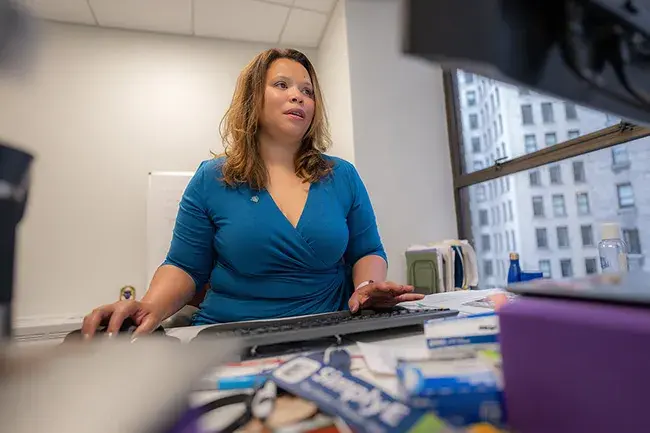
A woman in a teal blouse sitting at a desk working on the computer

Finance

Advancing solutions that broaden access to capital, streamline lending processes, or remove systemic barriers that prevent households from accessing financial products.

Finance innovations must demonstrate how their model can be replicated or scaled, and how it contributes to creating a more accessible housing market for renters and homebuyers.

Finance innovations can include but are not limited to:

  • New sources or structures of capital directed toward preservation, development, or supportive services
  • Systems or processes that expand access to capital, especially for households with limited access to homeownership
  • Expansion or improvements to existing tools that generate new investment(s) in resident wealth building, workforce development, and financial stability

Image
A student in a red shirt using a table saw

Service Delivery and Programs

Elevating comprehensive, people-centered programs using housing as a platform for broader outcomes – stability, empowerment, education, or workforce development.

Service Delivery and Programs innovations must have demonstrated impact and a clear pathway to replication or scaling.

Service Delivery and Programs innovations may:

  • Increase housing choice, agency, and empowerment for residents with lower incomes
  • Transform the housing experience, especially for vulnerable populations (e.g., seniors, families with children, unhoused individuals and families, and people with disabilities)
  • Integrate safe, affordable housing into holistic service delivery, mobility pathways, or workforce or education initiatives


Round 1: Criteria, Scoring, and Competition Details


Criteria

Innovations had to meet the criteria below to advance to the official scoring stage.

Type of Community

Innovations can serve all types of communities:

  • Rural
  • Urban
  • Suburban
  • Tribal

Location

Priority scoring will be given to applications from entities that are based in – or whose innovations are designed for – one or more of these 28 states, plus D.C.:

  • Alaska, Arizona, Arkansas, California, Colorado, Florida, Georgia, Idaho, Illinois, Iowa, Maryland, Massachusetts, Minnesota, Montana, Nevada, New Jersey, New Mexico, New York, North Carolina, North Dakota, Pennsylvania, South Carolina, South Dakota, Tennessee, Texas, Utah, Virginia, Washington, Washington D.C.

Affordability

Innovations must serve residents at these income levels:

  • Rental: 80% AMI or below
  • Homeownership: 120% AMI or below
  • Workforce housing: 120% AMI or below

Organization Type

The lead organization must be one of the following:

  • Nonprofit organization with 501(c)3 status
  • Mission-oriented for-profit
  • Quasi-governmental organization, Housing Authority, and Housing Finance Agency with 501(c)(3) entity serving as lead applicant
  • Tribally Designated Housing Entity (TDHE)
  • Tribal Housing Authority
Scoring

Applications are scored based on a 55-point rubric with three overarching criteria.

Innovation Efficacy and Feasibility (30 points)

  • Is the idea innovative and transformative? Would the idea revolutionize or reshape the field? (5 points)
  • Is this feasible? Does this innovation provide evidence of a pilot, proof of concept, and implementation that produced clear, measurable outcomes? (5 points)
  • Demonstrated cost savings and/or additional resources (5 points)
  • Demonstrated time savings and/or process efficiencies (5 points)
  • Resident impact, future and/or existing (5 points)
  • Innovation scalability. Can it be replicated or scaled? (5 points)

Readiness (15 points)

  • Demonstrated impact and proof of concept or pilot (5 points)
  • Clarity on use of resources and implementation (5 points)
  • Project team readiness (5 points)

Alignment with Overarching Challenge Priority (10 points)

  • Does the innovation align with the definition of your selected focus area?

Bonus: Priority Market (15 points)

Is the lead entity based in, or is the innovation designed for, any of the following priority markets?
  • Alaska, Arizona, Arkansas, California, Colorado, Florida, Georgia, Idaho, Illinois, Iowa, Maryland, Massachusetts, Minnesota, Montana, Nevada, New Jersey, New Mexico, New York, North Carolina, North Dakota, Pennsylvania, South Carolina, South Dakota, Tennessee, Texas, Utah, Virginia, Washington, Washington D.C.
     
Competition Details

The Housing Affordability Breakthrough Challenge is a three-round competition. All applicants began in Round 1, and only those selected as semifinalists and finalists will be invited to advance to Rounds
2 and 3.

Final award recipients will be selected from the Round 3 finalists by a panel of judges, including leaders from Wells Fargo, Enterprise, and nationally recognized housing and community development experts.
 

Round 1: Open Application Round
April 1 - May 15, 2026 (Closed)
Round 2 semi-finalists announced late summer 2026

Round 2: Semifinalist Selection
Aug. 10 to Sept. 18, 2026

  • Round 2 is open only to applicants selected as semifinalists from Round 1. 
  • Round 3 finalists announced week of November 2, 2026.

Round 3: Finalist Review
Fall 2026 to Winter 2027

  • Round 3 is open only to applicants selected as finalists from Round 2.
  • Winners announced in winter 2027.
Get the Answers You Need
Interested in the Housing Affordability Breakthrough Challenge? Read through our FAQs.